Friday, 7 August 2026, 21:58
📌 Key Takeaways
Republican Sen. Lisa Murkowski said Friday she will oppose Todd Blanche's nomination as attorney general, narrowing the confirmation path for President Trump's pick to lead the Justice Department. Her announcement came as the Senate prepares for a close vote on one of Trump's most controversial Cabinet choices.
Murkowski is the second GOP senator to break with Blanche. Sen. Susan Collins of Maine announced her opposition earlier. With McConnell of Kentucky not attending Senate sessions, Blanche can afford to lose only three Republican votes if all Democrats oppose him. That means one more Republican no vote could be decisive if the full Democratic caucus stays united.
Later Friday, Sen. Bill Cassidy of Louisiana ended that uncertainty by announcing he will support Blanche. Cassidy acknowledged the political tightrope, saying Blanche has become a referendum on how people feel about President Trump. "This process should be about Mr. Blanche," he said, adding with emotion, "I'll be criticized for this vote, but what's new." Cassidy criticized Blanche for initially approving the $1.8 billion fund and for endorsing a tax immunity deal for Trump, but argued that Blanche is likely better than anyone else Trump could nominate.
Murkowski said the country needs an attorney general who will check the worst impulses of the administration.
"The country needs an attorney general who will check the worst impulses of this administration. Blanche is able to achieve that, if confirmed, but I simply do not have confidence that will be the case," Murkowski said.
She specifically cited the Justice Department's handling of files related to disgraced financier Jeffrey Epstein, a sweeping tax audit immunity deal for Trump, and a proposed $1.8 billion fund meant to compensate allies of the president.
Murkowski also said she is concerned the administration could revive the compensation fund even after Blanche formally rescinded it. "Once we vote, that will end, and there is no telling what the future holds," she said.
The Senate Judiciary Committee advanced Blanche's nomination after a deal reached last weekend with two Republican senators who had threatened to block him: John Cornyn of Texas and Thom Tillis of North Carolina. The two senators had raised concerns about the settlement of Trump's lawsuit against the IRS regarding leaked tax returns.
Blanche rescinded the so-called Anti-Weaponization Fund, writing an order stating, "beyond any doubt, that there is no Fund." Democrats say the order does not go far enough and have called for legislation to permanently bar the fund. Trump has repeatedly defended the fund and threatened to push it forward if Republicans do not support Blanche.
Cornyn and Tillis also pressed for clarification on the tax audit immunity agreement. The Justice Department clarified in writing that the agreement applies only to claims open at the time of the settlement and does not protect Trump from examination of future tax filings. It also covers only the parties that brought the lawsuit: Trump, two of his sons and the Trump Organization.
Trump said in an interview released Friday that he would keep Blanche as acting attorney general if the Senate rejected him. Cassidy did not acknowledge that comment in explaining his vote, and in either case, the president could fire Blanche at any point.
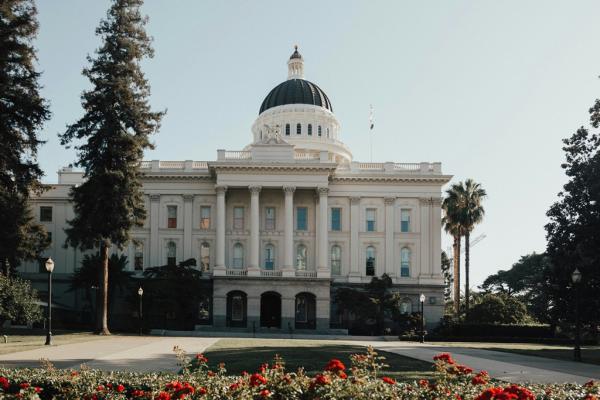
While the vote takes place in Washington, California has a direct stake in who leads the Justice Department. The attorney general oversees federal prosecutions, civil rights enforcement, and criminal cases handled by U.S. Attorney's offices across California's four federal districts. A change in leadership at the Justice Department can affect immigration enforcement, public corruption cases and consumer protection actions in the state.
Blanche's nomination has been contentious from the start. Senate Republicans needed a deal to keep it alive after Cornyn and Tillis threatened to block a committee vote. The agreement resolved a standoff over Trump's lawsuit against the IRS, but it did not erase Democratic concerns about the administration's use of federal law enforcement power.
Murkowski's opposition made Blanche's path harder, but Cassidy's support largely resolved the uncertainty. With Collins and Murkowski against him, every remaining Republican vote is now essential if all Democrats oppose the nomination. Cassidy's backing likely secures the majority, though Trump's suggestion that he would keep Blanche as acting attorney general if the Senate rejected him adds another layer to the final outcome.