Tuesday, 28 July 2026, 14:17
The National Weather Service (NWS) has upgraded a heat watch to an extreme heat warning for Santa Barbara and Ventura counties, effective from 10 a.m. July 13 through 8 p.m. July 16. Temperatures are projected to climb between 90 and 110 degrees Fahrenheit, with inland areas facing the most intense heat. The warning also covers parts of southwest California, including the Antelope Valley foothills, Malibu Lake, and the Santa Ynez Mountains. This heat wave is part of a larger heat dome affecting roughly 100 million people across the United States, with temperatures 20 to 30 degrees above average for this time of year. The hottest conditions are expected in southern California's Coachella Valley, including the city of Palm Springs, which could see dangerously high temperatures of 117 degrees on Thursday and Friday.
The extreme heat warning includes Santa Barbara and Ventura counties, as well as specific communities such as Goleta, Montecito, Carpinteria, Santa Paula, Gaviota, Lake Casitas, Ojai Valley, Thousand Oaks, Simi Valley, Calabasas, Agoura Hills, and the Antelope Valley foothills. The warning is in effect from July 13 to July 16, with Wednesday expected to be the hottest day. Additionally, Los Angeles County was placed under an updated extreme heat warning by the NWS on Tuesday at 10:20 a.m., valid until Thursday July 16, at 8 p.m. The full list of affected locations also includes: Western Santa Monica Mountains Recreational area, Eastern Santa Monica Mountains Recreational area, Calabasas/Agoura Hills, Western Antelope Valley Foothills, Eastern Antelope Valley Foothills, Antelope Valley, Santa Barbara County Southwestern Coast, Santa Barbara County Southeastern Coast, Santa Ynez Mountains Western Range, Santa Ynez Mountains Eastern Range, Lake Casitas, Ojai Valley, Central Ventura County Valleys, and Southeastern Ventura County Valleys. Santa Clarita Valley, Los Angeles County Inland Coast including Downtown Los Angeles, San Fernando Valley, Santa Susana Mountains and San Gabriel Valley are also included in the warning. The extreme heat is expected to span a wide swathe of the country — both within and beyond the West. Parts of Arizona, Nevada, New Mexico, Texas, Arkansas and Florida are all forecast to see triple-digit or near-triple-digit temperatures through at least the end of the week, according to the National Weather Service. Particularly dangerous heat has lingered in Arizona, with temperatures reaching 113 degrees in Phoenix on Monday, Tuesday and Wednesday — and not dipping below 90 degrees. Temperatures could creep up to 115 degrees by midday Thursday, and might not fall below 110 degrees in the Phoenix area before next week, according to forecasters. The weather service has issued extreme heat warnings and advisories for millions in the desert Southwest, and portions of the Southeast, which were scheduled to remain effective until Friday night. Extreme heat watches have also been preemptively issued for parts of Colorado, Montana and the Dakotas, since they were slated to bear the brunt of the warmth once it spreads this weekend through next week. In Billings, Montana, temperatures reached a record high of 111 degrees on Sunday as the dangerous heat was felt across the Great Basin, the Rockies and sections of the desert Southwest. The peak for the Northern Tier is expected on Tuesday, while the Northeast's peak is expected on Wednesday. The heat index across this wide stretch of the country will reach into the high 90s to over 100 for the next several days. Salt Lake City reached an all-time high on Sunday, with temperatures reaching 109 degrees, according to the National Weather Service. The previous record was 107 degrees, which was last broken in 1960, 2002, 2021 and twice in 2022. Most of Utah was under an extreme heat warning, which was scheduled to remain in place through Tuesday morning. Heat also spread across the Dakotas, with forecasters issuing extreme heat warnings for vast sections of both states. Forecasters warned of the dangers associated with the unusually prolonged bout of heat, which they've called "exceptionally rare" for some locations, even in mid-July. The National Weather Service said hazardous heat would spread eastward at times, while lingering in that central region through next weekend.
In addition, the extreme heat warning now also covers most inland areas of Los Angeles, Orange, Riverside and San Bernardino counties, beginning at 10 a.m. Tuesday and continuing through 8 p.m. Thursday. In the San Fernando Valley, highs are forecast to reach 105 on Tuesday, 110 on Wednesday and 104 on Thursday, before about 10 degrees of cooling arrives Friday.
An extreme heat warning took effect at 10 a.m. Tuesday for much of Los Angeles County and will remain in place through 8 p.m. Thursday, according to the National Weather Service. The warning covers the valleys, mountains and inland portions of the coastal plain, where temperatures are expected to range from the 90s to as high as 110 degrees during the peak of the heat event Wednesday and Thursday. A heat advisory will remain in effect through Thursday evening for coastal areas, including Los Angeles County beaches and the Palos Verdes Hills, where temperatures could still climb well into the 80s and 90s, forecasters said. An extreme heat warning will also be in place for inland Orange County areas from 10 a.m. Wednesday to 8 p.m. Thursday, with a heat advisory in place during the same time frame for Orange County coastal areas.
Officials are also urging residents to limit strenuous outdoor activities during the hottest parts of the day, seek air-conditioned spaces, drink plenty of water, check on elderly neighbors and loved ones, always check the back seat for children and pets, and provide shade and water for animals. Outdoor workers should take frequent breaks.
Here are some basic tips from the city of Los Angeles: Drink plenty of cool water; stay hydrated. Wear loose, light-colored clothing that will keep you cool. Wear sunscreen and a hat for protection. Check on neighbors who might be vulnerable to the heat, especially those without air conditioning. Never leave children or pets in a car — not even for one minute. Temperatures inside a car can quickly skyrocket to deadly levels. If you work or play outside, take frequent breaks to hydrate and cool off in the shade. Keep pets indoors if possible. If kept outside, give them plenty of water and shade to rest in. Symptoms of heat-related illness include dizziness, fatigue, faintness, headaches, muscle cramps and increased thirst. If you experience these symptoms, seek medical attention.
Public health officials say heat-related illnesses, such as exhaustion and heatstroke, increase significantly during extreme heat. General symptoms of heat-related illness include vomiting, dizziness, confusion, and hot, red, dry or damp skin. The first sign of heat-related illness that may lead to heat exhaustion or stroke is heat cramps, according to the National Weather Service. Heat cramps are painful muscle cramps and spasms that usually occur in the legs and abdomen followed by heavy sweating. If you or someone else is experiencing heat cramps, apply firm pressure on cramping muscles or gently massage to relieve spasm. Take sips of water unless you feel nausea, then stop. If the cramps last longer than one hour seek immediate medical attention. If you see or experience any heat-related illness symptoms, move to a cool place and call 911. Check in on people who are vulnerable to heat-related illness by looking for: flushed face, excessive sweating, difficulty moving around, general symptoms of heat-related illness. If you see they’re exhibiting any of these symptoms, get them some water and help move them to a cooler place.
Several wildfires have broken out across the state in the last week, including a new one in Los Angeles County on Monday. The Zebra fire began Monday around 7 p.m. near State Route 39 and Mountain Laurel Way in Azusa and has closed the highway at Sierra Madre Highway. It was 25 acres Monday night.
In Los Angeles County, the San Fernando Valley will probably see the most extreme temperatures, with Woodland Hills expected to hit 110 degrees Wednesday. The Antelope Valley could also reach near 110 degrees, while Santa Clarita will be close behind at 105 or 106 degrees, forecasters said. Low temperatures across the region will probably remain in the 70s even overnight, providing little relief and exacerbating health concerns.
Temperatures have been well above normal since last week and will stay about 3 to 6 degrees warmer on Tuesday, with communities in the valleys up to 8 to 10 degrees warmer. The National Weather Service forecasts that Wednesday will be the hottest day of the week. Temperatures in some inland communities will climb into the mid to high 90s by noon. High temperatures forecasted: Santa Clarita: 99, Agoura Hills: 97, Glendale: 94, Downtown LA: 89, Pasadena: 98, Norwalk: 93, Riverside: 98.
An NWS extreme heat warning will go into effect at 10 a.m. Tuesday and remain until 8 p.m. Thursday for much of the region. The hot and humid conditions will significantly increase the risk of heat-related illnesses, including stroke and exhaustion. The added monsoonal moisture contributing to the humidity will also bring the chance of possible showers and thunderstorms. Weather officials are urging the public to take extra precautions during the heat. They ask people to limit outdoor activities, take action if you are experiencing symptoms of heat exhaustion or stroke and stay in rooms with air conditioning. As the region prepares for the dangerous conditions, the Emergency Management Department for the city of Los Angeles reminds people of the dangers of leaving children and pets in unattended cars. Temperatures inside a car can quickly skyrocket and be deadly. CBS LA has issued a Next Weather Alert until Thursday warning residents about the heat event that might disrupt their normal routine. City officials have established cooling centers and hydration stations for residents to utilize during the heat. The increase in onshore flow will bring cooler temperatures on Thursday.
Emergency alerts in Southern California: For “considerable or catastrophic” hazards, emergency alerts will be sent to all enabled mobile phones in the area. To monitor lesser risk, residents are advised to sign up for county alert systems and to monitor agencies’ social media. How to sign up for alerts in your area: LA County, Orange County, Riverside County, San Bernardino County.
Humid conditions and warm overnight temperatures will exacerbate the risk of heat-related illnesses. Vulnerable populations—including young children, older adults, people without air conditioning, and outdoor workers—are at higher risk. The NWS recommends: drinking plenty of water, staying in air-conditioned rooms, avoiding direct sunlight during peak hours, wearing lightweight clothing, and reducing strenuous outdoor activities. If someone shows signs of heat stroke, move them to a shaded area and call emergency services immediately. Additional safety tips include: drinking 3 to 4 cups of water every hour to replenish fluids lost through sweat, taking breaks in cool shaded areas, avoiding alcohol and caffeine, and stopping activity if symptoms like nausea or dizziness occur. For information about cooling centers, residents can visit county websites such as ready.lacounty.gov/heat for Los Angeles County. Emergency alerts for “considerable or catastrophic” hazards will be sent to all enabled mobile phones in the area. To monitor lesser risk, residents are advised to sign up for county alert systems and to monitor agencies’ social media. Extreme heat has closed hiking trails in the Phoenix area and prompted a surge of emergencies, with the Phoenix Fire Department telling "CBS Mornings" it has responded to about 400 heat calls since May 1. Phoenix Fire Captain John Prado said firefighters had already responded to two heat stroke emergencies and once utilized the department's "cold water immersion" strategy, which aims to rapidly lower the body temperature of a person suffering a heat-related emergency. He said emergency responders were using the technique "daily, across the entire city." Eighteen people in the Phoenix area have died so far this year from heat-related issues, according to local officials, who said that figure was much higher than the five heat-related deaths recorded by this time last year. "Heat related illnesses increase significantly during extreme heat events," the National Weather Service said. "Overexposure can cause heat cramps and heat exhaustion to develop and, without intervention, can lead to heat stroke."
Los Angeles County Health Officer Dr. Muntu Davis reinforced the severity of the situation, urging people to recognize that heat is an invisible but lethal threat. "Heat causes more deaths in the U.S. annually than floods, storms, and lightning combined," Dr. Davis said in a statement.
In addition to the heat, a beach hazards statement is in effect through July 15 for Santa Barbara, San Luis Obispo, Ventura, and Los Angeles counties. Dangerous rip currents, breaking waves with high surf, and minor coastal flooding from abnormally high tides (7 to 7.6 feet) are expected. There is also a slight chance of isolated lightning strikes on July 13. Beachgoers should avoid entering the water and remain near staffed lifeguard towers.
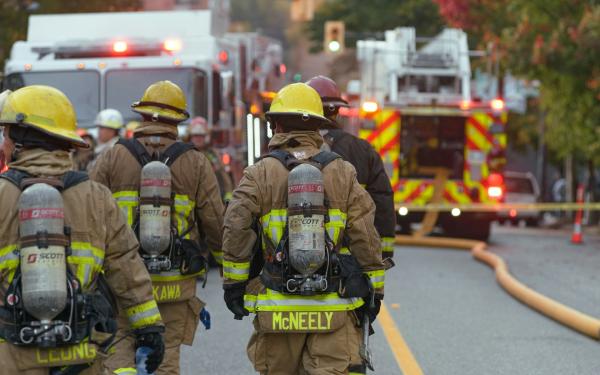
The extreme heat has also fueled wildfires in the region. In California, the Summit Fire in the Antelope Valley temporarily forced people outside Los Angeles to evacuate as it burned nearly 3,000 acres. The Los Angeles County Fire Department said crews made significant progress on the blaze, with containment at 31% as of Sunday evening. The heat dome increases wildfire risks across the West, and residents should be prepared for potential evacuations. Fire weather alerts were in place, too, for parts of the region, through Thursday. CBS News meteorologist Nikki Nolan said dry thunderstorms and low relative humidity increased risks of wildfires, noting how lightning strikes could spark flames in an area with little rain to extinguish them. Two wildfires were sparked on Sunday in Colorado's high country even as firefighters continued to battle the Aspen Acres Fire, which had burned more than 850 structures, including hundreds of homes. Sen. John Hickenlooper, a Colorado Democrat, toured the damage this week and said the state needs more funding to battle wildfires. "There have been huge cuts to the fire service, to the BLM [Bureau of Land Management], there've been cuts everywhere," Hickenlooper said.
A red flag warning of critical fire danger conditions will be in place from noon Wednesday through 9 a.m. Thursday for the 5 Freeway corridor in Los Angeles County, thanks to the combination of strong northwest to north winds, high heat and low relative humidity.
Monsoonal moisture moving over the area will add to the discomfort, also bringing the potential for showers and thunderstorms each day, according to the National Weather Service. Those thunderstorms are most likely to occur over the mountain and desert areas as subtropical moisture is drawn into the region by a strong ridge of high pressure. The high pressure is expected to slowly weaken Thursday, bringing afternoon highs to within a few degrees of normal in most areas by Friday. Forecasters also warn that any lightning strikes from these storms could spark new wildfires, increasing the fire danger in already dry areas.
The Antelope Valley foothills, located in northern Los Angeles County, are among the areas under the extreme heat warning. This region, known for its high desert climate, is particularly susceptible to rapid temperature spikes. Santa Barbara and Ventura counties, which include both coastal and inland communities, face dual threats: extreme heat inland and hazardous beach conditions along the coast. Overnight temperatures in Southern California are forecast to be record-breaking, providing limited relief from the heat.
Southern California frequently experiences extreme heat events during summer months, often exacerbated by high-pressure systems. The NWS issues heat watches and warnings based on temperature thresholds and humidity levels to protect public health. Previous heat waves in the region have led to heat-related illnesses and power grid strain, underscoring the importance of preparedness. The current heat dome is affecting a vast area, with record-breaking temperatures reported in cities like Salt Lake City (109°F, an all-time high) and Billings, Montana (111°F). The projected temperatures come close to some of the hottest days ever recorded in downtown Los Angeles. According to records compiled by Current Results and the Los Angeles Almanac, the all-time high for downtown LA is 113°F, set on September 27, 2010. Other notable peaks include 111°F on September 6, 2020, and 108°F on July 6, 2018. While this week’s forecast does not appear likely to break that all-time record, several inland locations may approach or exceed monthly records. The NWS noted that June’s record high for downtown LA is 112°F (June 26, 1990), while July’s is 109°F (July 25, 1891). This week’s heat could challenge the July record in some areas.
Residents in Santa Barbara, Ventura, Los Angeles, and surrounding counties should take immediate precautions to stay safe during this extreme heat event. Monitor local weather updates, check on vulnerable neighbors, and avoid risky activities both inland and at the beach. The heat warning is expected to ease after July 16, but vigilance remains crucial.