Monday, 27 July 2026, 22:51
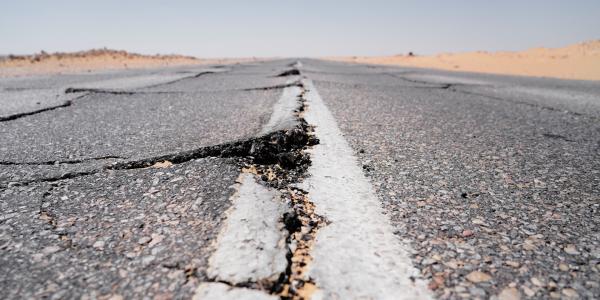
The Cajon Pass, a critical juncture of the San Andreas and San Jacinto earthquake faults in Southern California, is under historic levels of tectonic stress. A new study using computer simulations of the past 1,000 years of seismic activity warns that the likelihood of a large future rupture has increased significantly.
Researchers from Hawaii, Pasadena, and La Jolla modeled fault stress accumulation since the year 1100. They found that the current stress level near the Cajon Pass matches that just before a major earthquake in 1249. The lack of a major quake since 1857 has allowed stress to build to dangerous levels. 'Tectonic stress has continued to build along these faults, increasing the likelihood of a large future rupture,' the study states.
The pass acts as a natural barrier or gateway between the two fault systems. Over the past millennium, five ruptures were confined to the San Andreas and four to the San Jacinto. The study describes these as 'Gate Closed' or 'Gate Open' events. For example, the 1857 Fort Tejon quake was 'Gate Closed' and did not cause damage south of the pass. However, if the gate opens, a simultaneous rupture could produce a catastrophic 'Big One'.
San Bernardino County, which includes the Cajon Pass and communities like Hesperia and Wrightwood, would be directly affected. The 1812 earthquake caused significant damage in the area. Residents along the Interstate 15 corridor, a major commuting route, face heightened risk. Local emergency services should review response plans.
The San Andreas Fault is the boundary between the Pacific and North American tectonic plates. Its southern section has been relatively quiet since the 1857 Fort Tejon earthquake, which ruptured from Parkfield to Cajon Pass. The San Jacinto Fault, active more recently, has produced smaller quakes. The interaction between these two faults at Cajon Pass has been a focus of seismologists for decades.
While the 'Big One' may not strike today, the study underscores the need for continuous monitoring and public preparedness. Seismic retrofitting, emergency kits, and community drills can mitigate risks. As the study reminds us, the fault system is critically stressed—it's a matter of when, not if.