Monday, 27 July 2026, 22:51
A wildfire named the Dove Fire erupted Sunday afternoon in Tuolumne County, west of Yosemite National Park, prompting immediate evacuations. The blaze, reported as a PG&E vegetation fire, had grown to 223 acres with a dangerous rate of spread as of 10 p.m., according to Cal Fire. However, by 9:44 p.m., Cal Fire reported that firefighters were making "good progress" and fire activity had decreased.
The fire was reported at about 2:48 p.m. near Highway 108 and Mill Villa Road, according to Cal Fire.
Mandatory evacuation orders are in effect for Dove Lane, McKibbon Drive, Golden Dove Lane, Crooked Lane, Southgate Road, Stockton Road, Silver Pine Lane, Washington Street to Lowe's, and the north side of Mono Way to Washington Street. Additionally, mandatory evacuation areas include Simons Lane, Hill Street, Sonora Avenue, Fair Street and Gerrymander Avenue. Evacuation warnings cover areas from S. Washington St. to Soulsbyville Rd., Tuolumne Rd. to Hess Ave., Martha Lane, Outlook Drive, and Barretta Street. Officials urge those needing extra time or with pets and livestock to leave immediately.
Additionally, evacuation orders have been expanded to include The Silos on Washington Street to Hospital Road and Beretta Street from Washington, Restano and Mono Way to Lyons Road. Evacuation centers include the Tuolumne County Resilience Center at 18241 Bay Ave. in Tuolumne, and the Tuolumne County Transit Center at 12879 Justice Center Drive in Sonora. Shelters for pets and large animals are also available at the Tuolumne County Animal Control facility on Victoria Way in Jamestown and at the Tuolumne County Sheriff's Posse Grounds on Rawhide Road.
Road closures include Highway 108 at Stockton Road, Stockton Road at Woodside, and other points. Traffic is being diverted. As of Monday, State Route 108 was reopened to one-lane traffic between the junction of State Route 49 and Washington Street in Sonora.
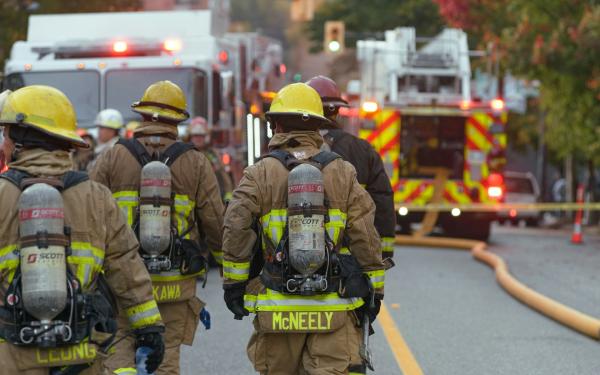
Cal Fire has deployed nearly 500 personnel as of Monday morning, including at least three helicopters, 22 engines, four dozers, and three water tenders. Numerous air tankers from across the state are conducting suppression missions as conditions allow. Two firefighters were injured battling the blaze, according to Cal Fire spokesperson Emily Kilgore. Both individuals were treated by medical personnel and released with minor injuries. Three helicopters conducted water drops overnight, Cal Fire said in a status update at 8:34 p.m. At 5:37 p.m., Cal Fire officials said the fire was "holding within the retardant lines, yet still has a moderate rate of spread" and firefighters were attempting to establish containment lines. As of Sunday night, no structures had been damaged or destroyed. The fire's cause remains under investigation. Late Sunday night, Cal Fire reported the fire was 1% contained and its rate of spread had slowed from dangerous to moderate. Weather conditions on Monday include hot and dry weather with temperatures in the mid- to upper 90s, which may impact fire behavior.
The fire is burning about 70 miles west of Yosemite National Park, near the communities of Sonora and Jamestown. Sonora, a popular gateway town for Yosemite visitors, is under immediate threat. Yosemite and surrounding areas have been hit with multiple wildfires in recent years, including the 2022 Washburn Fire that burned nearly 5,000 acres and encroached on the iconic Mariposa Grove of Giant Sequoias.
Cal Fire recommends maintaining at least 100 feet of defensible space around homes by clearing vegetation and other combustible materials that could fuel a wildfire. The Department of Homeland Security also recommends keeping an emergency kit ready with important documents, medications, N95 respirator masks and other essential supplies in case residents need to evacuate quickly.
California's wildfire season has been active, with several large fires this year. The Dove Fire adds to the strain on state resources, especially in the Sierra Nevada foothills where dry conditions and winds can rapidly spread flames. PG&E, the utility involved, has faced scrutiny over vegetation management in the past. Researchers warn that rising global temperatures due to climate change will lead to more frequent and intense wildfires in the future. The amount of U.S. land burned each year in the 2020s, averaged out over a decade, is now more than twice what it was 30 years ago.
Residents should stay alert to changing evacuation orders and road closures. Cal Fire continues to update its incident page. Residents can also sign up for emergency alerts through local authorities to stay informed. Those in affected areas are advised to prepare for possible expansion of fire activity.