Tuesday, 28 July 2026, 2:56
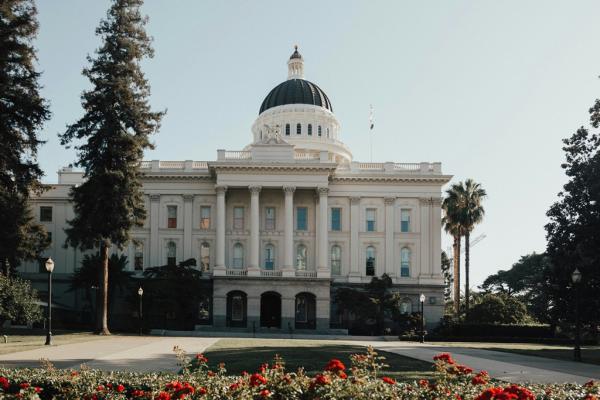
The Trump administration has deferred more than $1 billion in federal Medicaid payments to California and Minnesota, with California facing $867.5 million in halted funds and Minnesota nearly $200 million. The Centers for Medicare & Medicaid Services (CMS), led by Dr. Mehmet Oz, claims the move targets "suspected fraud and noncompliance." Gov. Gavin Newsom's office disputes the rationale, calling it a political attack.
Health and Human Services Secretary Robert F. Kennedy Jr. announced the deferral on Tuesday, July 22, alongside Dr. Oz. Kennedy stated the funds are paused until California provides documentation to support specific Medicaid claims, particularly for in-home care programs. "We are not sending Medicaid dollars out the door until we have confidence that they are being spent lawfully and appropriately," Kennedy said during a press conference. He added, "If Governor Gavin Newsom or Governor Tim Walz wants this funding released, all they have to do is provide basic documentation showing that these services are legitimate and not fraudulent." CMS reviewed these claims and found spending growth "far exceeded national trends." Oz added that California's spending "doesn't make sense" and emphasized a commitment to "cleaning up fraud in healthcare." The deferral is not a permanent cut; California can restore funding by submitting required documentation.
Oz also pointed out that over the past two years, California's spending for in-home services was "twice the rate of the average of the rest of the entire nation." "If it smells like fraud, we're not paying for it anymore," he said, adding that CMS is deferring payments until California can substantiate their claims from this past quarter audit.
Oz said CMS flagged suspicious billing patterns, including providers who submitted claims more than a year after services were provided, billed four or more patients simultaneously, or ranked among the top 2.5% of billers nationwide. Haywood Talcove, CEO of LexisNexis Risk Solutions for Government and a nationally recognized fraud expert, told The California Post that taxpayers should be "outraged" over the alleged lack of oversight that he said enables widespread fraud in California. "Anytime you have a program like this where it is self-reported, there is virtually no auditing, and no one gets caught, then the probability of fraud is very, very high," he said, estimating that fraud accounts for roughly 20% of the IHSS program. Talcove explained how fraudsters can exploit IHSS, describing the process as a "piece of cake." According to Talcove, the fraud scheme begins when someone submits an IHSS application claiming to need in-home care, then designates a caregiver and persuades a licensed healthcare professional to falsely certify their need for care in exchange for a "cut." "I'll tell you that your fake person that doesn't exist needs home healthcare, and guess what? You're going to give me a little cut. That's how it goes," Talcove said, adding that the "state doesn't have the technology, doesn't have the people, and doesn't have the systems to validate it." Talcove argued California lacks the staffing, technology and incentive to adequately verify the state's more than 500,000 IHSS recipients. "There's no money that comes out of the state pocket," he said. "The incentive structure federally funded, state-administered is a recipe for disaster."
In Minnesota, the review focused on 14 high-risk Medicaid service areas previously identified by the state's legislative auditor as especially vulnerable to fraud. Oz said roughly $413 million in Minnesota Medicaid claims were under review this quarter. Of that amount, a little over $3 million is tied to documentation gaps, including claims allegedly submitted for care to people who were dead. Another portion of approximately $42 million is tied to claims from nearly 870 providers flagged through fraud detection analytics. The largest share of the deferred funding stems from Medicaid providers that Minnesota recently disenrolled after failed background checks, failed site visits, or other compliance issues. "This raises questions about the claims tied to these same providers," Oz explained. "We looked back to see how much they billed us last quarter, and unfortunately, it was a lot. It's the majority of the $199 million that we're deferring to Minnesota today."
Gov. Newsom's press office fired back on X, calling the deferral a "recycled political stunt" and insisting California is being targeted for political reasons, not fraud. The office argued that the state's higher costs stem from prioritizing in-home care over more expensive nursing homes, which actually saves taxpayer money. Newsom's team stated, "We hate fraud. That's not what this is," and offered to collaborate with CMS in good faith. State Attorney General Rob Bonta is also looking into fraud cases.
California Governor Gavin Newsom rejected the administration's claims of rampant fraud, describing the decision to halt payments as "pure politics." "We take fraud seriously," Newsom said. "We don't politicize it like these guys." The governor claimed that Tuesday's announcement was an attack on his potential successor Xavier Becerra, the Democratic candidate for governor and a former Health and Human Services chief under former President Biden. Newsom also said his office has been actively cooperating with the Trump administration, pointing to communications in which information requested from California was already provided. "California's approach, which had been long approved by CMS, saves federal and state taxpayers money," a spokesperson for Newsom's office told The Post. "One year of in-home care saves state and federal taxpayers approximately $100,000 per person annually versus nursing facility care. A 2020 California State Auditor report found no program integrity concerns and recommended increasing reimbursement rates to grow the in-home care provider workforce and reduce reliance on institutional care."
California's Medi-Cal program serves millions of residents, with a strong emphasis on in-home supportive services (IHSS) that allow seniors and people with disabilities to live independently. The state's spending on these programs has grown, but officials argue it reduces overall healthcare costs by avoiding institutional care. The deferral impacts funds already budgeted for these services, potentially straining local providers and patients in cities like Los Angeles, where hospice fraud has been a longstanding issue.
Nearly 15 million people are covered by Medi-Cal, and annual healthcare spending has grown to over $200 billion. California's total budget for the 2026-2027 fiscal year is $351.7 billion. Experts argue that the program has become 'fiscally unsustainable.' Sally C. Pipes, president of the Pacific Research Institute, wrote in an issue brief that "what was once a targeted safety-net program increasingly functions as a vast public entitlement system with growing fiscal and administrative challenges." In an interview, Pipes expressed delight that attention is now being paid to the issue, saying "we might be able to get a grip on eliminating it." She emphasized the need to strengthen eligibility requirements, increase oversight of managed care organizations, improve transparency, and refocus resources on vulnerable legal residents. Pipes also cited an estimate from the Paragon Health Institute and the Economic Policy Innovation Center suggesting there were over $1 trillion in cumulative federal Medicaid improper payments across the nation between 2015 and 2024. Pipes believes the healthcare fraud in California started in March 2010 when Medicaid eligibility expanded under the ACA, followed by Governor Jerry Brown's expansion to undocumented immigrant children in 2015 and continuous coverage during the COVID-19 pandemic. During the pandemic, the federal government covered 90% of the costs, leaving states to shoulder just 10%. This enhanced match was supposed to end when the pandemic ended, but it did not, according to Pipes. "When you're covering undocumented people, California is a state where there's a lot of fraud and abuse because there's no oversight," she said. "It's just the perfect thing for people who are fraudulent, to take advantage of and abuse the program." Pipes also argued that the proposed wealth tax has driven billionaires to other states, reducing tax revenue. "So finally, Gov. Newsom had to make a few changes, which includes freezing new medical enrollment for undocumented immigrants starting this year and establishing monthly premiums for certain enrollees starting in 2027. He's had to finally realize that this program is out of control and it's costing too much money." She added that many on Medi-Cal should be in the workforce, and the supply of doctors is far lower than demand, leaving vulnerable populations without care. "Taxpayers are hurt because they're paying higher and higher taxes and they're supporting a program that is full of fraud and abuse, and not taking care of the vulnerable people who it was set up to take care of," Pipes said. Pipes expressed hope for reform within the next year.
Medi-Cal eligibility is primarily based on income. For adults aged 19-64, the income limit is 138% of the Federal Poverty Level (FPL), which is $22,025 for an individual and $45,540 for a family of four in 2025. Children 18 and under qualify if family income is at or below 266% of FPL ($87,780 for a family of four). Pregnant women may qualify for Medi-Cal for Pregnant Women if income is above 138% but at or below 213% of FPL ($46,093 for a single pregnant woman with first child, $70,290 for a family of four). This coverage includes prenatal care, labor, delivery, postpartum care, and family planning services. Notably, Supplemental Security Income (SSI) benefits are not counted as income for eligibility, and there is no asset limit for these categories.
Sally C. Pipes noted that the expansion of Medi-Cal to all undocumented immigrants, effective January 1, 2024, added roughly 1.7 million enrollees and is projected to cost $8.5 billion annually. She argued that this expansion, combined with the Affordable Care Act's eligibility expansion, contributed to the program's fiscal unsustainability. In response to the growing costs, Gov. Newsom has taken steps to curb enrollment, including freezing new enrollment for undocumented immigrants and establishing monthly premiums for certain enrollees starting in 2027, effectively acknowledging that the expansion had become fiscally unsustainable. Additionally, California's proposed wealth tax has driven billionaires to other states, reducing tax revenue and further straining the budget.
This is not the first clash between Newsom and Oz. Earlier this year, Newsom filed a civil rights complaint against Oz after Oz blamed Armenians in Los Angeles for over $3 billion in hospice fraud. A 2021 Los Angeles Times investigation had already uncovered widespread hospice fraud in the city, leading to charges against 109 people.
More recently, a California man pleaded guilty to orchestrating a $270 million medication fraud scheme, according to the U.S. Department of Justice, and over the past two years, state officials have revoked more than 280 hospice licenses due to fraud, according to an issue brief by the Pacific Research Institute.
Oz responded by vowing to continue going after "fraudsters." The current deferral echoes previous disputes over California's Medicaid spending under the Trump administration.
The deferral of $867.5 million in Medicaid payments to California marks a significant escalation in the feud between Dr. Oz and Gov. Newsom. While the administration frames it as a fraud-fighting measure, California sees it as political retribution. The state must now provide documentation to unlock the funds, or face potential impacts on healthcare services for vulnerable populations.
This is the fourth deferral announced by CMS related to Medicaid funding for Minnesota in recent months. In February, officials announced they would withhold $243 million from Minnesota – as part of an effort to block $2 billion in funding for the state – as an effort to combat fraud. Subsequently, CMS announced deferrals of $260 million and $91 million. In March, Minnesota Attorney General Keith Ellison filed a lawsuit over the $243 million in pulled funds, to prevent federal officials from moving forward with plans to block the $2 billion in funding. In May, a judge granted a mutual stay in that case as Minnesota and federal officials tried to hammer out a deal. It's unclear how the new deferral could affect negotiations in that case.
Gov. Tim Walz pushed back on the administration's claims, saying, "This isn't about fraud — it's about cutting your healthcare so that Trump can afford the tax cuts he gave to billionaires. They're cutting more money in healthcare than they've prosecuted for fraud. The math doesn't add up." In a separate statement, temporary Minnesota DHS Commissioner John Connolly wrote: "We have cooperated in good faith and proactively engaged the Centers for Medicare and Medicaid Services to first raise the alarm on fraud in Minnesota's Medicaid program, to effectively investigate fraud and to institute further safeguards against future misuse of funds. CMS touts their new fraud-detection capabilities, yet has not provided data or explanation on how the deferral amount was calculated or what it was based on. I respectfully ask the federal government to partner with us and share any information about their methods to identify potentially fraudulent providers in Minnesota. Today's actions show that the federal government is acting again in unprecedented and punitive ways as part of their war on Medicaid and its recipients. Partnership – not politics – is required to stop criminals and protect services for the people who need them."