Tuesday, 28 July 2026, 6:48
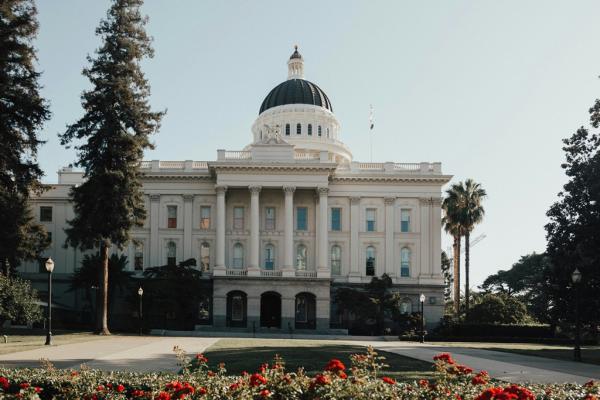
On July 6, 2026, environmentalists rallied at the California State Capitol in Sacramento to oppose revisions to the state's cap-and-invest program, which charges major polluters for greenhouse gas emissions. The protest, organized by groups including Third Act Sacramento, featured a mourning ceremony to highlight perceived threats to climate progress. Just days earlier, on July 1, an environmental justice organization filed a lawsuit seeking to overturn the new regulations.
Protesters gathered inside the Capitol building, holding a symbolic mourning ceremony. Ruth Holton-Hodson of Third Act Sacramento explained that the lamenters aim to wake people up to the planet's plight. Transit advocate Ren Zaro Fitzgerald expressed frustration over CARB's handling of the process, noting a rushed public comment period that limited input before the board approved changes in late May. Fitzgerald stated, 'We’ve never really gotten a chance to express how we as Californians feel about this, and now they’re threatening to arrest us at the Capitol.'
The rally took place in Sacramento, the state capital, underscoring the direct impact of state policy on local communities. Sacramento County residents are particularly affected by changes to climate funding, as the region relies on state programs for transit and affordable housing. The protest reflects broader statewide tensions over balancing economic interests with environmental goals.
California's cap-and-invest program, established under AB 32, has been a key tool for reducing greenhouse gas emissions since 2013. Critics have long argued that it allows polluters to buy credits rather than cut emissions. The latest revisions, approved by CARB in May 2026, aim to update the program but have sparked controversy over their impact on funding for climate initiatives.
The Cap-and-Invest Program, formerly known as Cap-and-Trade, sets a cap on greenhouse gas emissions and issues allowances that companies can buy, sell, or trade. About 75% of the state's emissions are regulated under the program. Revenues from allowance sales go to the Greenhouse Gas Reduction Fund (GGRF), which funds transit, affordable housing, clean air, clean water, and wildfire mitigation programs. Historically, GGRF revenues have fluctuated between less than $1 billion to over $5 billion annually.
The program was reauthorized in 2025 under AB 1207 and SB 840, extending it to 2045 and changing how GGRF revenues are allocated. Under the new structure, funding is distributed in tiers: Tier 1 includes priority funding for manufacturing tax exceptions and CalFire; Tier 2 includes $1 billion annually for high-speed rail and $1 billion for other programs; Tier 3, which receives leftover funds, includes transit, affordable housing, clean air, and clean water programs. The CARB changes are expected to reduce GGRF funding by $2 billion per year, threatening Tier 3 programs.
On July 1, Communities for a Better Environment (CBE) filed a petition in Sacramento County Superior Court arguing that CARB violated the California Environmental Quality Act (CEQA) when it approved sweeping changes to the cap-and-trade program in May. The lawsuit asks the court to invalidate the regulations and require CARB to complete a new environmental review before readopting them. The complaint contends that CARB made substantial revisions during the final stages of the rulemaking process, including increasing the number of free emissions allowances available to major industrial facilities such as refineries, without adequately studying their environmental impacts or giving the public a meaningful opportunity to review them. CBE argues those changes could increase greenhouse gas emissions, worsen air pollution in communities already burdened by industrial facilities, and reduce revenues that currently fund transit, affordable housing, active transportation, wildfire prevention, and other climate programs. The lawsuit also alleges that CARB failed to adequately respond to hundreds of public comments raising concerns about the environmental consequences of the changes and improperly certified its environmental review despite significant unanswered questions. CARB has defended the changes as an effort to balance California’s climate goals with affordability during a time when gas prices are spiking and the competitiveness of in-state manufacturers. During the board’s May meeting, Deputy Executive Officer Rajinder Sahota acknowledged the competing pressures facing the agency and attempted to absolve politicians from blowback. “There is no direction to us, as an agency, to maximize one trade-off versus another,” Sahota said. “What we’re trying to do is balance all of the pieces that we’re getting.” The environmental organization is asking the court to vacate CARB’s approval of the regulations, set aside the environmental review, and require the agency to conduct a legally adequate CEQA analysis before readopting the rules.
Although the lawsuit is framed as a CEQA challenge, its practical implications are much broader. If successful, it could force CARB to revisit one of the most consequential climate policy decisions of the Newsom administration and reopen the debate over whether California should prioritize protecting industrial polluters or maximizing investments in emissions reductions, transit, housing, and environmental justice. As Streetsblog reported in June, the new regulations dramatically increase the amount of emissions allowances distributed for free to industrial polluters while reducing the number sold at auction. Because auction proceeds finance many of California’s climate investments, critics warned the changes could significantly reduce funding available for public transit, affordable housing near transit, bicycle and pedestrian infrastructure, and other programs supported by the Greenhouse Gas Reduction Fund. Environmental justice advocates also argue that giving refineries additional free allowances weakens incentives to reduce emissions and could prolong harmful pollution in neighborhoods located near industrial facilities. “Relying on cap-and-trade alone was never going to be enough, and a cap-and-trade program that is weak on emissions reductions will not get us there,” wrote CBE Policy Director Lauren Gallagher in an essay explaining the organization’s opposition to the changes. Gallagher argued the revised regulations provide larger giveaways to major polluters while reducing resources available for clean transportation, affordable housing, and other climate investments. Not everyone opposed the new regulations. Adam Smith, representing Southern California Edison, praised CARB’s action.
The lawsuit, filed in Los Angeles County Superior Court, marks the first major legal challenge to the cap-and-invest program since legislators agreed last year to extend its life beyond the original 2030 expiration date to 2045. The updated program will remove 118 million allowances from the market by 2030 and 900 million after 2030, which officials say will keep California on its path to carbon neutrality by 2045. However, the air board also introduced a new mechanism, the manufacturing decarbonization incentive, about six weeks before the vote. This incentive allows polluters to apply for and receive up to 118 million new allowances in exchange for investments in decarbonization projects, intended to discourage companies from leaving the state. The lawsuit says this change was introduced hastily and without proper CEQA review, noting that the draft environmental impact assessment published in January was not revised to address the changes introduced in April, and the final assessment was not posted on CARB’s website until May 26, two days before the hearing began. “The amendments lock in decades of subsidies for polluting industries, without CARB having performed the required analysis of their wide-ranging environmental harms,” the suit says. CARB spokesperson Lindsay Buckley defended the process, stating, “This lawsuit does nothing to advance environmental protection — instead it attempts to undercut a critical climate program and creates market uncertainty that harms revenue potential for community investments.” Some board members expressed hesitation before the vote, but ultimately agreed to adopt the incentive, committing to additional workshops and evaluations. CARB chair Lauren Sanchez said, “The work does not stop here with this vote.” Critically, the lawsuit notes that the plan threatens cap-and-invest revenue used to fund housing, transit, and clean air and water projects. An analysis from the Legislative Analyst’s Office found that the new incentive program will result in a loss of $2 billion annually for the Greenhouse Gas Reduction Fund. The losses are likely to hit low-income communities and communities of color hardest, as they are already disproportionately affected by air pollution, extreme heat, and poor air quality.
The protest and lawsuit highlight ongoing conflicts over California's climate policies. As CARB moves forward with September implementation, advocates vow to continue pressing for transparency and accountability. Residents are encouraged to stay informed and participate in future public comment periods.