President Donald Trump escalated his administration's rhetoric against Iran on Thursday, threatening to seize control of the country's key oil infrastructure, including Kharg Island, as the United States conducted a second consecutive day of airstrikes against Iranian military targets. In a social media post, Trump claimed that Iran's military capabilities had been largely destroyed and asserted that the U.S.
would eventually take over Kharg Island and other energy assets. "At some point in the not too distant future, we will be taking Kharg Island, and other oil infrastructure points, and assume total control of their Oil and Gas Markets," Trump wrote.
The comments mark a significant escalation in the conflict, which has already seen three rounds of military action this week, including fighting between Iran and Israel and two rounds of strikes between the U.S. and Iran.
The U.S. Central Command (CENTCOM) stated that the latest airstrikes targeted Iranian military surveillance, communication systems, and air defense sites in response to what it called Iran's "unwarranted and continued aggression." CENTCOM reported that U.S.
Marine Corps, Air Force, and Navy assets fired precision munitions at Iranian targets that posed a threat to U.S. forces and international commercial ships in regional waters.
Iran retaliated by firing at Kuwait, Bahrain, and Jordan, mirroring its actions from the previous day. The escalating violence has further complicated a ceasefire agreement reached in April, raising doubts about whether diplomatic efforts to end the war can survive.
Trump warned that Tehran would "pay the price" for stalled negotiations, while Iran's Foreign Ministry stated that the U.S. attacks had "effectively rendered the ceasefire meaningless," though it stopped short of explicitly abandoning the agreement.
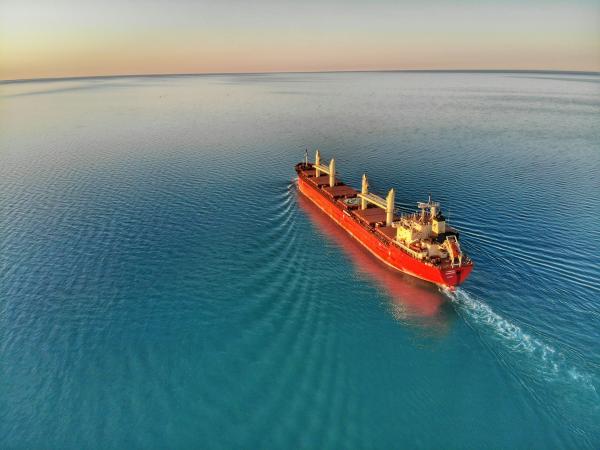
At the heart of the dispute is Iran's blockade of the Strait of Hormuz, a critical shipping route for global oil and natural gas supplies, and U.S. demands that Tehran relinquish its stockpile of highly enriched uranium, which the U.S.
and Israel fear could be used to build a nuclear weapon. Iran announced Thursday that the strait was closed, but CENTCOM disputed the claim, stating that commercial vessels continued to transit the waterway.
Trump claimed that a U.S. military mission to escort oil tankers and commercial vessels through the strait had enabled more than 100 million barrels of oil to reach global markets and that over 200 commercial ships had safely transited the waterway.
"This wildly successful effort is because the UNITED STATES of AMERICA CONTROLS the Strait of Hormuz — NOT Iran," Trump wrote. He added that Iran's military had been defeated and its economy was "lost." Despite these claims, the conflict continues to exact a human toll.
Indian Ports, Shipping and Waterways Minister Sarbananda Sonowal announced that three Indians missing after the American attack on the tanker Settebello had been killed. CENTCOM accused the Settebello of violating the blockade by attempting to transport oil from Iran, and American forces fired into the ship's engine room to stop it.
Meanwhile, a Qatari diplomatic delegation coordinating with the U.S. on efforts to end the war left Tehran on Thursday after holding talks, according to an official familiar with the mission.
Iran has insisted that any agreement to end the war must also halt fighting between its ally Hezbollah and Israel, but Israeli Prime Minister Benjamin Netanyahu appears determined to continue pursuing the destruction of the militant group. The conflict has rattled global markets, with uncertainty surrounding shipping through the Strait of Hormuz pushing energy prices higher and increasing costs for consumers worldwide.