Martes, 30 Junio 2026, 0:22
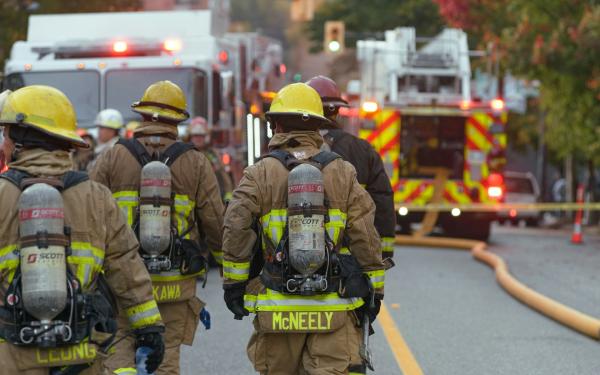
Yolo County Fire Shuts Down I-5, Forces Evacuations Near Dunnigan
📌 Southbound I-5 closed between County Roads 2 and 4 due to a large vegetation fire.
📌 Evacuation order issued for zone DUN-009, including areas west of I-5 between County Roads 2 and 6.
📌 A temporary evacuation center has been set up at Fire Station 12, 29145 Main Street.
📌 Traffic is being diverted via County Road 99W; no estimated reopening time as of 2:40 p.m.
A fast-moving vegetation fire in rural Yolo County near Dunnigan prompted the closure of southbound Interstate 5 and mandatory evacuations on Monday afternoon. The blaze, burning off the shoulder of I-5, sent a large plume of smoke visible for miles.
Fire and Road Closures
The California Highway Patrol (CHP) Woodland-area office reported that both lanes of southbound I-5 are closed between County Roads 2 and 4. The fire is burning along the interstate shoulder, and emergency crews are actively working to contain it. Drivers are being diverted onto County Road 99W and should expect significant delays.
Evacuation Orders
Yolo County officials issued an immediate evacuation order for zone DUN-009, which covers areas west of I-5 between County Roads 2 and 6, extending to County Road 88. Residents are urged to leave now. A temporary evacuation center has been established at Fire Station 12, located at 29145 Main Street in Dunnigan.
Local California Context
Dunnigan, a small community in northern Yolo County, sits about 19 miles north of Woodland and roughly 40 miles northwest of Sacramento. The area is rural, with I-5 serving as a critical north-south corridor for Central Valley traffic and commerce. The fire's location near the highway raises concerns about rapid spread due to dry vegetation and wind.
What's Next
Authorities have not yet specified the fire's size or containment status. As of 2:40 p.m., there was no estimated time for reopening I-5. This is a developing story; residents and travelers should monitor local alerts and avoid the area. Check back for updates.
Sources and Materials
Judge Denies Resentencing for Man Convicted in Killing of BPD Officer David Nelson
📌 Judge John Lua denied Julian Carlos Hernandez's petition for resentencing on June 24, 2026, upholding his second-degree murder conviction.
📌 Hernandez was found guilty in 2018 and sentenced to 31 years to life for the 2015 killing of Bakersfield Police Officer David Nelson.
📌 The ruling came two days before the 11th anniversary of Officer Nelson's death, after an evidentiary hearing ordered by the Fifth District Court of Appeal.
📌 Kern County DA Cynthia Zimmer emphasized that resentencing petitions strain justice resources and cause trauma to victims' families.
On June 24, 2026, a Kern County judge denied resentencing for Julian Carlos Hernandez, the man convicted of second-degree murder for the 2015 killing of Bakersfield Police Officer David Nelson. The decision came just two days before the 11th anniversary of Officer Nelson's death, reaffirming the original sentence of 31 years to life.
Background of the Case
Hernandez was convicted by a Kern County jury on April 5, 2018, for charges including second-degree murder in connection with Officer Nelson's death. The officer was killed during a high-speed pursuit on June 26, 2015. Hernandez led police on the chase with what prosecutors described as 'conscious disregard for human life,' ultimately causing Nelson's death.
Legal Proceedings Under Senate Bill 1437
California's Senate Bill 1437, enacted in 2019, allows convicted murderers to petition for resentencing if they were not major participants or did not act with intent to kill. Hernandez filed such a petition, which was initially denied on December 13, 2022. However, the Fifth District Court of Appeal reversed that decision, ordering an evidentiary hearing.
At the June 24, 2026 hearing, the Kern County District Attorney's Office argued that evidence proved Hernandez was the actual perpetrator who acted with implied malice. The DA's office stated in a social media post: 'Hernandez led police on a high-speed chase with conscious disregard for human life, and he caused the death of Officer Nelson during that pursuit. The Petitioner held a grudge against BPD officers due to his belief that his wife had an affair with a BPD officer, and the Petitioner intended to use a shotgun at the end of the pursuit to have a shootout with police.'
Prosecutor's Response
Kern County District Attorney Cynthia Zimmer commented: 'Resentencing petitions are now filed in nearly every felony case, consuming resources across the justice system, and most importantly, causing unnecessary harm for families who deserve closure. Preserving a conviction requires successfully defending it at every stage of the judicial process and we are pleased that the evidence presented throughout these proceedings continues to prove beyond a reasonable doubt that Hernandez is responsible for the murder of BPD Officer David Nelson.'
Local California Context
This case has deep roots in Kern County, where Officer Nelson served with the Bakersfield Police Department. The denial of resentencing brings a measure of closure to the local law enforcement community and the Nelson family, who have awaited justice for over a decade.
Conclusion
The court's decision upholds the original conviction and sentence, ensuring that Hernandez will continue to serve 31 years to life for the murder of Officer David Nelson. This ruling highlights the ongoing legal battles surrounding Senate Bill 1437 and the impact on victims' families in California.
Sources and Materials
BakersfieldNow - Judge denies resentencing for man convicted in killing of BPD Officer David Nelson

Juvenile Injured in Early Morning Drive-By Shooting in Visalia
📌 A juvenile sustained non-life-threatening injuries after a home on West Babcock Avenue was struck by gunfire.
📌 The incident occurred around 4 a.m. on Monday, June 29, 2026, in the area of Dinuba Boulevard and Ferguson Avenue.
📌 Visalia Police Department's Violent Crimes Unit is leading the investigation.
📌 Authorities urge anyone with information to contact Visalia PD or submit anonymous tips.
A drive-by shooting early Monday morning in Visalia left a juvenile injured, according to local police. The incident, which involved a home being struck by multiple bullets, is under active investigation by the Visalia Police Department's Violent Crimes Unit.
Details of the Shooting
Officers responded to reports of shots fired near Dinuba Boulevard and Ferguson Avenue around 4 a.m. on June 29, 2026. While searching the area, they received another call that a home on West Babcock Avenue had been hit by gunfire. A juvenile inside the home suffered a bullet wound, but injuries are considered non-life-threatening, per authorities.
Investigation and Community Response
The Visalia Police Department's Violent Crimes Unit has taken over the case. Police have not released any suspect descriptions or motives at this time. The shooting has raised concerns among residents about safety in the neighborhood.
“Anyone with information is urged to contact the Visalia Police Department at 559-734-8116 or submit an anonymous tip by calling 559-713-4738.”Local California Context
This incident occurred in Visalia, a city in Tulare County, California. The area has seen sporadic gun violence, and local authorities are working to address public safety. The shooting adds to ongoing concerns about juvenile safety and gun violence in the Central Valley.
Conclusion
The Visalia community is urged to remain vigilant and report any information to help solve this crime. The investigation continues, and updates will be provided as they become available.
Sources and Materials
Driver Charged with Murder in 405 Crash That Killed LAPD Sergeant
Mario Joseph Bickham, 36, charged with two counts of murder for deaths of LAPD Sgt. Shiou Deng and Jesus Garcia on June 23, 2025.
Bickham was allegedly driving 112 mph on the 405 Freeway near the Getty Center when he struck Deng and Garcia.
Prosecutors cite Bickham's history of excessive speeding, including a prior citation for 105 mph a month before the crash.
Deng, a 26-year LAPD veteran, was helping Garcia after a hit-and-run when the collision occurred.
If convicted, Bickham faces up to life in prison; bail is set at $4 million or denied.
On June 29, 2026, prosecutors charged Mario Joseph Bickham with two counts of murder for a high-speed crash on the 405 Freeway that killed LAPD Sgt. Shiou Deng and motorist Jesus Garcia. The incident occurred in June 2025, highlighting the dangers of reckless driving in Los Angeles County.
Details of the Crash
According to the Los Angeles County District Attorney's Office, Bickham was driving at 112 mph near the Getty Center exit around 2 a.m. on June 23, 2025. He struck Deng, who had stopped to assist Garcia after a hit-and-run. Garcia's vehicle was disabled in the HOV lane. Despite 33 other vehicles safely passing the scene, Bickham's high speed made it impossible to avoid the collision. He braked seconds before impact, but it was too late.
Victim Profiles
Sgt. Shiou Deng, 53, was a 26-year veteran of the LAPD, primarily serving in the Mental Evaluation Unit. He is survived by his wife, stepdaughter, and elderly parents, whom he cared for. Jesus Garcia, 34, was returning home from his shift at Whole Foods in Woodland Hills when he was struck by a hit-and-run driver, who remains unidentified.
Prosecutor's Case
District Attorney Nathan Hochman emphasized Bickham's history of excessive speeding, including a 105 mph citation a month before the crash. Bickham had also been involved in multiple accidents since 2014 and failed to attend traffic school or court hearings. “This is not an individual who all of a sudden woke up one day and this was the first time he ever hit a speed over 100 miles per hour,” Hochman said. The CHP reconstructed the crash, confirming Bickham's speed.
Local California Context
The crash occurred on the southbound 405 Freeway in the Bel-Air area of Los Angeles, a notoriously congested route. The LAPD and CHP have since increased enforcement on the 405, but this tragedy underscores the risks of speeding in Los Angeles County. Deng's death has deeply affected the West L.A. station, where he was remembered as a dedicated officer.
Legal Proceedings
Bickham was arrested at his home in Hawthorne on June 29, 2026. He faces two counts of second-degree murder, with a potential sentence of 15 years to life in prison per count. The court has set bail at $4 million or denied it, citing the severity of the case. His first court appearance is pending.
Conclusion
This case highlights the consequences of reckless driving in California. Bickham's alleged disregard for speed laws led to a preventable tragedy. The community mourns the loss of a dedicated officer and a hardworking motorist, while authorities push for justice.
Sources and Materials

Tony Nuñez Unseats Incumbent Hernandez in Santa Cruz County District 4 Supervisor Race
📌 Tony Nuñez won outright with 50.07% of the vote, avoiding a November runoff.
📌 Incumbent Felipe Hernandez received 30.84%, marking a rare primary defeat for a sitting supervisor.
📌 Nuñez plans to focus on economic development, affordable childcare, and down-payment assistance in South County.
📌 The county faces a $23.2 million deficit for the 2026-27 fiscal year.
In a significant upset, longtime community leader and former journalist Tony Nuñez has defeated incumbent Felipe Hernandez in the race for the District 4 seat on the Santa Cruz County Board of Supervisors. Nuñez secured a simple majority plus one vote, winning outright in the June 2 primary election and avoiding a November runoff.
Election Results and Context
Nuñez earned 50.07% of the vote (3,944 out of 8,510 votes cast), while Hernandez received 30.84% and third-place candidate Elias Gonzales got 18.41%. This marks the first time in recent history that an incumbent supervisor has lost a reelection bid in the primary. Hernandez faced criticism over his stance on a proposed battery storage facility near Watsonville and the county's handling of related ordinances.
Nuñez's Priorities
Nuñez emphasized increasing economic development in South County, which he believes is key to meeting community needs. He wants to collaborate with Watsonville city officials to boost tourism, traditionally driven by agriculture and nonprofits. He also aims to address the high cost of living by creating a pilot program for low-cost childcare up to transitional kindergarten and a robust down-payment assistance program for local residents.
Local California Context
Santa Cruz County is currently grappling with a $23.2 million deficit for the 2026-27 fiscal year. Nuñez will also need to vacate his role as board chair of the Pajaro Health Care District, which operates Watsonville Community Hospital, amid a leadership transition. The county's challenges are particularly acute in South County, where residents face high housing costs and limited economic opportunities.
Conclusion
Nuñez's victory signals a shift in voter priorities in Santa Cruz County, with a focus on local economic development and affordable living. As he prepares to take office, he will need to navigate budget constraints and community expectations to deliver on his campaign promises.
Sources and Materials
Supreme Court Upholds Late Mail Ballot Counting, Protecting California's 7-Day Rule
The U.S. Supreme Court ruled 5-4 that states can count mail-in ballots postmarked by Election Day but received up to seven days later, rejecting a Republican-led challenge.
California's law allowing ballots to arrive within seven days after Election Day remains intact, benefiting thousands of voters in San Diego and statewide.
Justice Amy Coney Barrett wrote the majority opinion, joined by Chief Justice John Roberts and the three liberal justices, emphasizing that federal election day statutes do not set a ballot receipt deadline.
More than 400,000 late-arriving ballots were counted in California in 2024, representing 2.5% of total votes, with no evidence of fraud.
The decision avoids election-year chaos for administrators and upholds state authority over election procedures.
In a significant victory for voting rights and state autonomy, the U.S. Supreme Court on Monday upheld California's vote-by-mail rules, allowing election officials to count mail-in ballots that arrive after Election Day if they are postmarked beforehand. The 5-4 ruling in Watson v. Republican National Committee rejected a challenge by national Republicans and the Trump administration, ensuring that California's seven-day grace period remains in effect.
What the Supreme Court Decided
Justice Amy Coney Barrett, writing for the majority, concluded that federal laws designating Election Day do not require ballots to be received by that date. “The election-day statutes require the electorate’s choice to be made on election day,” Barrett wrote. “But the election-day statutes do not set a deadline for ballot receipt.” Chief Justice John Roberts and Justices Sonia Sotomayor, Elena Kagan, and Ketanji Brown Jackson joined the majority.
The dissenting opinion, authored by Justice Samuel Alito and joined by Justices Clarence Thomas, Neil Gorsuch, and in part by Brett Kavanaugh, argued that the ruling undermines election integrity. “Not only is today’s decision inconsistent with statutory text, legal context, historical practice, and precedent; it also threatens to produce lamentable consequences,” Alito wrote.
Impact on California Voters
California Secretary of State Shirley Weber hailed the decision as a victory for voters. “This assures people that if I put my ballot in the mail and it gets postmarked, that it will be counted in California,” Weber said. In San Diego, election officials reported receiving thousands of ballots postmarked by Election Day but arriving late during the primaries. San Diego Registrar of Voters Shawn Brom noted that the seven-day window allowed those ballots to be counted.
State leaders emphasized that the rule protects voters from mail delays. “Even the postal service recognized that it could not guarantee things that were postmarked under the other election actually getting to us in time,” Weber said, citing instances where mail routes from California to Oregon and back caused delays.
Local California Context
California has been a focal point of GOP attacks on mail-in voting, but the state's system has proven reliable. In 2024, more than 400,000 late-arriving ballots were counted, amounting to only 2.5% of the total vote. Election law experts attribute slow tabulations to the surge in mail voting and the need for signature verification, not fraud. The Supreme Court ruling confirms that California's approach aligns with federal law, avoiding potential disruption for the upcoming midterm elections.
Reactions and Next Steps
Voting rights advocates praised the decision. “A ballot mailed on time is a vote cast on time, and the court just affirmed what’s been true for over a century,” said Sophia Lin Lakin, director of the ACLU’s Voting Rights Project. President Donald Trump called the ruling a “tremendous loss” on Truth Social and renewed calls for Congress to pass the SAVE America Act, which would impose stricter voting requirements.
Election officials in California will continue to educate voters about the rules. The decision underscores that states retain authority to set election procedures, a principle that remains intact heading into November.
Sources and Materials