Lunes, 22 Junio 2026, 12:24
(Source: Source )
When a fire broke out a few miles from his Altadena, California, home on the evening of January 7, 2025, Matt Blea and his family faced a critical decision: stay or evacuate. A friend involved in mountain rescue advised Blea to download a free app called Watch Duty.
Through the app, he could view the fire's perimeter, track evacuation orders, and read updates on emergency response efforts. "It influenced me to leave the home sooner than later," said Blea, who evacuated with his wife and son that evening, before the Eaton Fire destroyed their home.
Blea was among more than 2.5 million people who used Watch Duty to monitor fires burning across Los Angeles County that week. The information was collected, vetted, and disseminated by about two dozen staff members and over 100 volunteers who monitored emergency radio traffic, aircraft reports, and local agency communications.
The service proved vital, said David Hertz, a Malibu resident and captain of his community's fire brigade, especially when some areas received little to no warning about the Eaton and Palisades fires that killed 31 people. "It's like a democratization of data that empowers people."
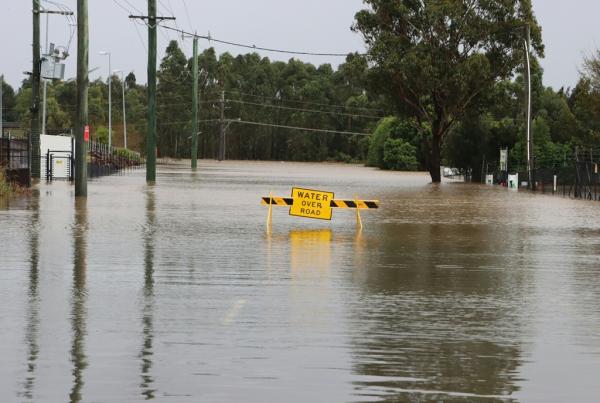
This month, Watch Duty began helping people track another deadly and destructive climate hazard: flooding. The expansion comes as peak flash flood season begins in the U.S.
and nearly one year after last July's deadly Texas floods that killed more than 130 people, prompting outcry over why Texas Hill Country residents and visitors did not receive better communication about the impending danger. "This is painful that this keeps happening," said John Mills, CEO and co-founder of the donor-supported nonprofit behind the app.
"We're not spreading enough information fast enough on as many channels as humanly possible."
Mills founded Watch Duty in 2021 after not receiving official alerts or evacuation instructions when a fire burned near his Northern California home. It's a problem seen in many recent disasters.
Often, the information people need to understand their risk is available, Mills said, but it is hard to find and use. "The systems are really struggling to meet people where they are." On fire days, Mills relied on volunteer radio operators who monitored scanners during emergencies and posted updates on social media.
The posts helped, but social media had downsides, including how misinformation and unrelated content could drown out life-or-death updates.
A software engineer and entrepreneur, Mills recruited some of those volunteers and fellow engineers to build a solution. He made Watch Duty a nonprofit, which has helped build trust with its more than 20 million users.
It received nearly $6 million in grants and donations in 2025. Watch Duty now has about 300 volunteer "reporters" who collate and vet information from radio scanners, cameras, satellites, user-generated content, and public announcements.
"You're not going to have to go to multiple other entities, to the weather service, emergency management website, county website," said Watch Duty meteorologist Pete Curran, a retired firefighter. "It's in one place, in plain language, and it's going to wake you up if you're asleep."
Watch Duty can sometimes push out information faster than local agencies in part because its reporters have only one role to fill. "Our only responsibility is to watch and listen.
We're not in charge of the incident," said Curran. The nonprofit took on flooding next because of its widespread impact.
"We are seeing crazy rainfall in places that it's not normal for them," said Dr. Lori Moore-Merrell, U.S.
Fire Administrator under President Joe Biden and longtime data scientist who is now a Watch Duty board member. "Maybe it's never happened before, but it's happening now, so you need to be aware."
The app pulls weather modeling and other data from the National Weather Service, National Oceanic and Atmospheric Administration, and U.S. Geologic Survey.
Users can view NWS flood warnings and watches, river gauge levels, and notices of possible dam or levee failures. Users can also better understand their risk ahead of time.
They can see whether they're in a FEMA-designated flood area, or what levels on a river gauge would indicate danger, and customize notifications to be alerted if a gauge reached a certain height.
Despite Watch Duty's explosive growth, a phone app cannot solve all the challenges with informing the public during emergencies. "I love seeing products like this come out, but one thing we know to be true in the Texas floods, is a warning is only as good as the knowledge to do something about it," said Chad Berginnis, executive director of the Association of State Floodplain Managers.
The ASFPM recommends knowing how to reach an evacuation zone and not just having an emergency plan, but practicing it. "One of the massive failures is not knowing what to do," said Berginnis.
The national infrastructure for monitoring weather and alerting the public is also at risk from past and proposed funding cuts to federal agencies and local emergency warning systems. "At the end of the day, if you want eyes and ears out there, you've got to pay for it," said Berginnis.
Mills stressed Watch Duty is not meant to replace the work of weather and emergency agencies. "We need National Weather Service, we need fire service, we need all this infrastructure to operate." He said users should still enroll in their local alerting system.
Of course, a phone app is only helpful to those who download it, and who have cell coverage to use it. "You have to have redundancy," added Berginnis, noting that an inexpensive NOAA weather radio can fill in when other systems fail.
"Sometimes we get so focused on tech, we forget the easy stuff."
© California TodayTodos los derechos reservados