Martes, 23 Junio 2026, 15:43
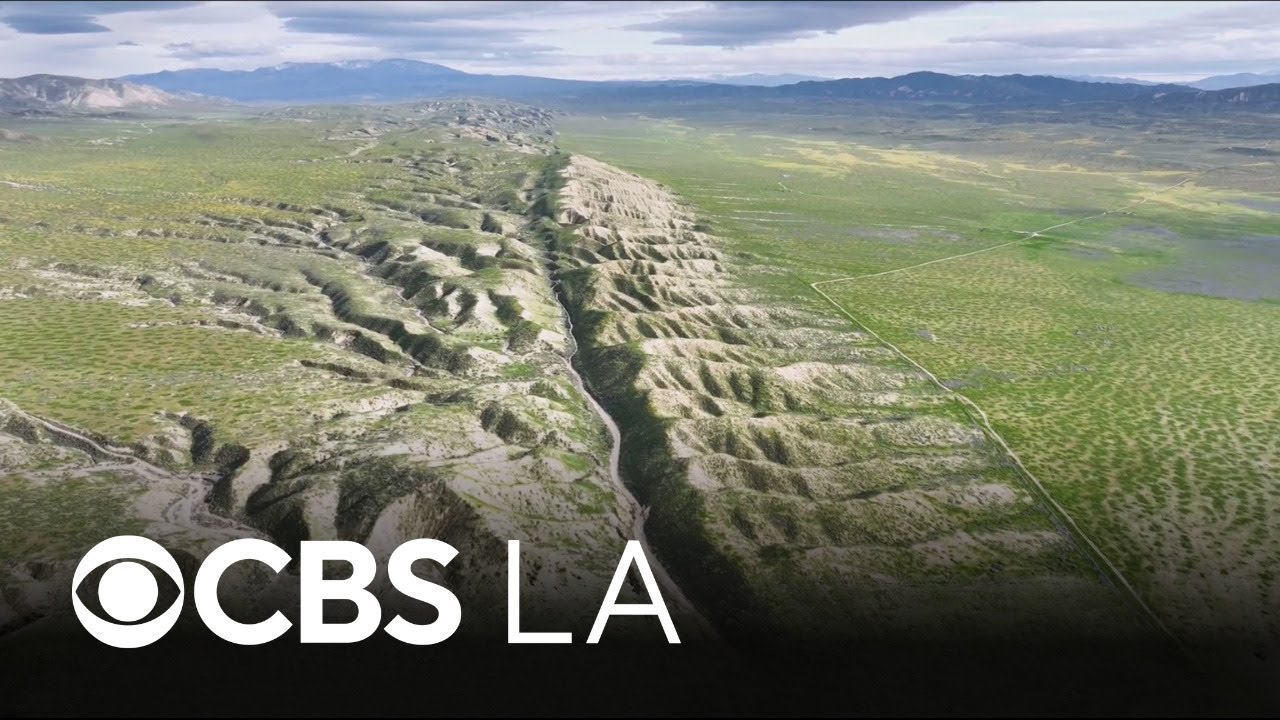
A new study has revealed that the San Andreas and San Jacinto faults in Southern California are under more stress than at any point in the last millennium, indicating that a major earthquake could be imminent. The research, originally published by LAist on June 23, was conducted by a team of scientists including Kate Scharer, a geologist with the U.S.
Geological Survey, and lead author Liliane Burkhard, a research affiliate at the Hawaiʻi Institute of Geophysics and Planetology.
Using geological evidence such as tree-ring records and sediment samples, the scientists created a computer model that simulates how pressure accumulates along faults over time. By running the model up to the present day, they estimated the stress currently building beneath the region.
They found that pressure has been gradually increasing since the last major earthquake in 1857, one of California's largest seismic events on record.
"Because it's been quite a long time since the Southern San Andreas or the San Jacinto have had a large earthquake, we've accumulated a lot of stress," said Scharer. Harold Tobin, director of the Pacific Northwest Seismic Network and a professor at the University of Washington, who was not involved in the study, noted that the idea of an imminent earthquake was already known, but this study puts it on a more quantitative, rigorous scientific basis.
A key area of interest is the Cajon Pass, a narrow corridor between the San Gabriel and San Bernardino mountains. Burkhard explained that Cajon Pass could act as an "earthquake gate," a junction that either stops or transmits large ruptures between the San Andreas and San Jacinto faults, depending on stress conditions.
This could allow a rupture to spread farther across Southern California, affecting millions more people in the Coachella Valley and San Bernardino County.
Scientists agree that Southern California will experience another major earthquake, but the exact timing remains unknown. "It could happen today, tomorrow, or in 10 years, or in 30 years," said Ahmed Elbanna, director of the Statewide California Earthquake Center and a professor at USC, who was not involved in the study.
"On geological time scales, these are all very short. So it's a question of when, not if." Scharer added, "We should certainly expect to experience large earthquakes in our lifetimes."
Burkhard hopes to continue studying other earthquake-prone regions where multiple fault systems interact, creating risks that remain difficult to predict. For residents of Southern California, the message is clear: preparedness is essential.
Source: lbpost.com
© California TodayTodos los derechos reservados