Viernes, 26 Junio 2026, 15:45
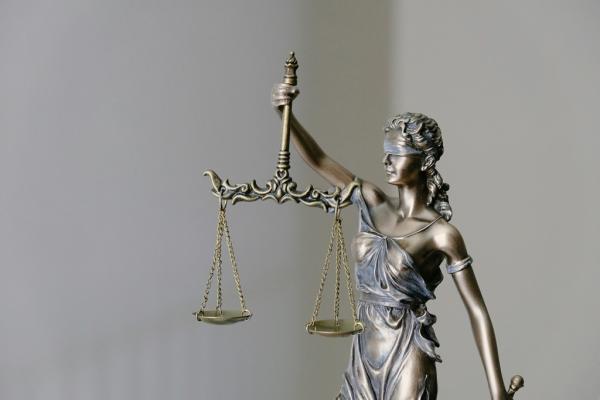
A Los Angeles Superior Court judge has denied District Attorney Nathan Hochman's request to delay more than $4 billion in sexual abuse settlement payments until the end of the year, ruling against the prosecutor's bid to freeze funds while his office investigates fraud allegations.
The $4 billion settlement, approved by the Los Angeles County Board of Supervisors in 2025, resolves over 11,000 claims of sexual abuse brought by individuals who were previously in custody at county juvenile halls, foster homes, and children's shelters. The abuse victims' attorneys argued vehemently against any blanket freeze, emphasizing that many claimants have endured severe hardships and lengthy delays.
During a June 15 hearing before Judge Lawrence P. Riff, lawyers for the victims stressed the urgent need for payments.
Hochman had indicated he was open to clearing verified hardship cases first, but the judge wanted additional briefing and held another hearing on Thursday, ultimately denying the stay request despite Hochman's claims that fraudulent submissions could be as high as 81%.
In court filings, the victims' legal team argued that these are not active civil cases awaiting trial. "The county chose to settle.
Individual plaintiffs executed individual settlement agreements. The parties adopted a master settlement agreement and allocation protocol.
The county agreed to fund the settlement," the firm's papers stated. They further contended that Hochman has no claim to the settlement funds, is not responsible for funding the settlement, and does not gain or lose by the direct legal operation of any settlement allocation.
Although Hochman argued that payment could interfere with an ongoing criminal investigation, the judge sided with the plaintiffs' lawyers, who maintained that this does not create a direct interest in settled claims or authorize him to suspend performance of individual contracts.
In his own court papers, Hochman asserted there were "significant allegations of fraud in a very significant majority of these cases" and that a hold until December 31 was necessary to protect the integrity of the settlement process. He stated he filed the motion "with the interests of the real victims in mind," adding, "This intervention is critical to safeguarding the rights of the legitimate child abuse survivors, including preserving the integrity of the settlement process.
It will also help ensure that individuals who have allegedly filed fraudulent claims are held accountable for exploiting the horrific abuse and trauma experienced by genuine survivors."
Three other plaintiffs' law firms, including McNicholas & McNicholas, expressed in their court filings that Hochman's intervention "has added a painful new layer to years of trauma." They highlighted that many claimants are gravely ill, have taken out high-interest loans against their expected recoveries, and are being deprived of funds needed for medical care, counseling, and rising living costs. "And now they watch as a non-party, with no standing in the settlement, publicly brands them potential fraudsters," the firms added.
Source: patch.com

A driver was killed early Friday morning in a single-vehicle crash on the westbound 134 Freeway connector near the 5 Freeway, close to the Los Angeles Zoo in Griffith Park. The California Highway Patrol reported the incident occurred around 6:05 a.m.
on June 26, 2026.
Emergency responders arrived to find the driver had been pronounced dead at the scene. The crash prompted the closure of two lanes on the westbound 134 at the 5 Freeway interchange.
A SigAlert was issued at 7:05 a.m. and extended at 9:00 a.m.
as authorities worked to clear the area and investigate the cause.
Traffic was severely impacted, with westbound backups stretching to Glendale Avenue. Commuters experienced significant delays throughout the morning rush hour.
The CHP is continuing its investigation into the circumstances of the crash, and no further details about the driver's identity have been released at this time.
The area, near the Los Angeles Zoo in Griffith Park, is a busy interchange that connects the 134 and 5 freeways. Authorities urge drivers to use alternate routes and exercise caution in the area.
Source: patch.com
The Los Angeles County District Attorney's Office announced Thursday that it will retry a man on a murder charge stemming from a deadly shooting at a Trader Joe's in Silver Lake in 2018. The decision comes after a jury deadlocked earlier this year on the most serious count against the defendant, 31-year-old Gene Evin Atkins.
Atkins is accused of opening fire inside the grocery store on July 21, 2018, killing one woman and injuring several others. The shooting, which prompted a three-hour hostage standoff with police, resulted in the death of 27-year-old Melyda Corado, a store manager.
Authorities say Atkins entered the Trader Joe's after fleeing from police following a domestic dispute with his grandmother.
During the initial trial, which concluded in February 2024, the jury convicted Atkins on multiple counts, including attempted murder and assault with a firearm, but could not reach a unanimous verdict on the murder charge. The deadlock forced Judge Sam Ohta to declare a mistrial on that specific count.
Prosecutors have now signaled their intent to proceed with a retrial, which is expected to begin later this year.
Atkins' defense attorney argued during the first trial that his client did not intend to kill anyone and that the death of Corado was a tragic accident. However, prosecutors maintained that Atkins' actions were deliberate and that he bears full responsibility for the chaos and violence that unfolded inside the store.
The case has drawn significant attention due to the traumatic nature of the incident, which left shoppers and employees trapped inside the store as gunfire erupted. The retrial is set to take place in downtown Los Angeles, and a date has yet to be scheduled.
Atkins remains in custody without bail.
Source: theeastsiderla.com
Source: patch.com
A federal judge declared a mistrial on Friday, June 26, after the jury in the trial of the man accused of starting the devastating Palisades fire announced it could not reach a verdict on any of the three charges. U.S.
District Judge Anne Hwang polled the jury, and each member confirmed that further deliberations would not break the deadlock. The mistrial sets the stage for a potential retrial if federal prosecutors choose to pursue the case again.
The trial centered on the Lachman fire, which authorities say began on January 1, 2025, when the defendant, identified as Rinderknecht, allegedly used a long-handled BIC lighter to ignite brush on a hillside in the Hidden Buddha area of Pacific Palisades. The fire was initially extinguished but smoldered underground for six days before re-emerging on January 7, 2025, as the Palisades fire.
Driven by Santa Ana winds, the Palisades fire burned over 23,500 acres across Pacific Palisades, Malibu, and other areas, killing 12 people and destroying or damaging more than 7,500 homes and businesses.
During the two-week trial, prosecutors presented testimony from over a dozen witnesses and argued that Rinderknecht, motivated by anger over wealth inequality and climate change, deliberately set the fire. Assistant U.S.
Attorney Danbee Kim told the jury, "He went up a hill in a neighborhood in the Pacific Palisades, a neighborhood he personally associated with his personal history with wealth and rejection. And when he went up that hill, he took this lighter with him." The defense countered that the fire could have been started by a firework or another person, and criticized the investigation for beginning 12 days after the Lachman fire, by which time the scene may have been altered by fire suppression efforts, the subsequent Palisades fire, winds, or hikers.
Rinderknecht did not testify in his own defense. The jury began deliberations on Wednesday, but by Friday morning, the judge and attorneys agreed that no progress was possible.
Outside the courtroom, defense attorney Steve Haney said his client was struggling with the uncertainty. "There is a lot of anxiety, you can imagine, your life is on the line," Haney said.
"It's a very stressful time for him and he's hanging in there. We'll see which direction this takes."
Rinderknecht was not charged with any of the deaths caused by the fire, and evidence about the fatalities was excluded from the trial. The U.S.
Attorney's Office declined to comment on the mistrial or potential retrial. Criticism has been directed at the Los Angeles Fire Department for its response to the initial Lachman fire, but evidence regarding that response was not permitted in court.
The trial took place at the Felicitas and Gonzalo Mendez U.S. Courthouse in downtown Los Angeles.
Meanwhile, a separate trial related to the Eaton fire, which erupted the same day as the Palisades fire and killed 19 people while destroying over 10,000 structures in the San Gabriel Valley, is scheduled for January 2027. In that case, attorneys will seek to prove that faulty equipment owned by Southern California Edison sparked the fire that devastated Altadena.
Source: dailybreeze.com
A half-dozen recent warehouse fires across California demonstrate that these conflagrations can no longer be considered a rare malfunction. They are a predictable consequence of the industry's current trajectory, as a 2025 analysis by Zurich Insurance describes how storage trends labeled "too dense, too tall" have dramatically increased hazards.
Imagine a single roof covering one million square feet, stacked floor to ceiling with pallets of TVs, kayaks, electronics, batteries, hand sanitizer, vapes, toys, clothing, and suitcases, all wrapped in plastic. When a mega-warehouse burns, it is akin to an entire neighborhood going up in flames.
These massive structures, often exceeding one million square feet, are popular in part because they make the transition to automation more cost-effective. Automation facilitates top-to-bottom stacking while minimizing the need for human workers, but it also increases fuel density, creates larger areas for firefighters to cover, introduces more complex electrical systems, and places fewer eyes on the floor to spot early signs of trouble.
This combination has made modern warehouses a recipe for incendiary disaster. Big-box conflagrations require multi-agency collaboration, hundreds of firefighters, and days or even weeks to contain.
The recent cold-storage warehouse fire in Boyle Heights, which choked the air across Los Angeles, is a stark example. Fires can cause supply chain disruptions, financial losses in the millions, plumes of acrid smoke, soil and water contamination, and massive piles of toxic debris.
A 2020 fire in Redlands leveled a concrete tilt-up building the size of a city block and took a week to extinguish. That fire blanketed nearby neighborhoods with smoke, ash, and noxious fumes, leaving debris covering the equivalent of two football fields.
Post-fire cleanup led to a backroom deal to dump thousands of truckloads of rubble next to the San Bernardino neighborhood of Verdemont, where high winds dispersed concrete dust and dislodged pebbles that pelted windows, people, cars, and pets for years until the rubble was finally removed using thousands of truck trips. In December 2021, a three-alarm fire at the Carson Industrial Center was fueled by pallets of beauty products.
Toxins entering the Dominguez Channel caused a malodorous organic die-off, leading to headaches, sore throats, burning eyes, and nausea for months. After logging over 4,700 odor complaints, the region's air quality regulator issued five citations to the warehouse's complex chain of actors, including cosmetics brands, wholesalers, and Prologis, one of the largest warehouse companies in the world.
At the Kimberly-Clark warehouse in Ontario in April, a viral video allegedly showed an employee igniting some of the warehouse's one billion rolls of toilet paper, reportedly saying, "All you had to do was pay us enough to live." Warehouse fires also include higher rates of arson by exploited employees, who may set blazes, tamper with electrical systems, and disable mandatory sprinkler systems. The industry is heavily dependent on temp labor models with low wages, hostility toward collective bargaining, rapid employee turnover, and high rates of worker disability.
In recent days, the Lineage cold-storage warehouse in Boyle Heights burned for more than a week as the associated parties shifted responsibility. Global cold-storage food distributor Lineage Logistics leases the building from Chill Build, LLC, a joint venture of Barber Partners and Bain Capital.
Lineage in turn leases the roof to Los Palos Street Operating, LLC, a division of Altus Power, whose solar equipment may have malfunctioned during maintenance. Community members and residents city-wide impacted by toxic air from layers of insulated foam and plastics—and millions of pounds of burning or rotting frozen food—deserve to know who is responsible.
It is also important to understand how global capital underwrites local harm. Monumental buildings have monumental consequences.
Frontline community members have known this for years; now we are all getting a taste of it.
Source: almanacnews.com
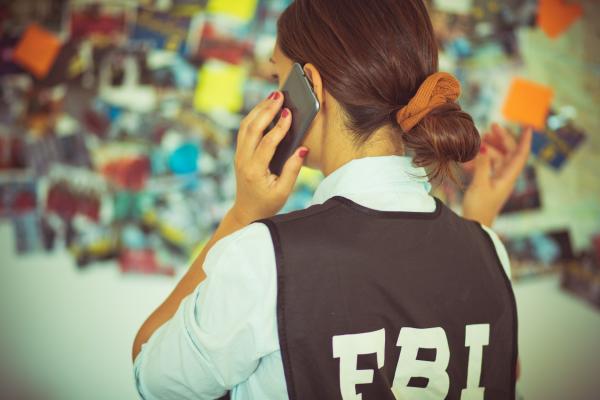
Federal authorities have arrested a Palmdale man accused of blackmailing teenage girls and coercing them into producing sexual images, the Federal Bureau of Investigation (FBI) announced Thursday. Kenneth Mellor, 20, of Palmdale, was taken into custody in Pennsylvania on Wednesday following an eight-month investigation.
The FBI said the investigation began in October 2025 after Mellor allegedly claimed to be in a relationship with a 12-year-old girl and forced her to create sexual content. After conducting a forensic review of digital devices seized from Mellor's home, investigators discovered that the suspect had communicated with numerous suspected victims.
According to the FBI, investigators have so far identified approximately 12 confirmed minor victims, with more than 10 additional victims yet to be identified. Mellor allegedly threatened, intimidated, and emotionally manipulated his young victims.
At least one of the minors may have attempted self-harm following Mellor's coercion. The complaint further alleges that Mellor frequently attempted to befriend and groom girls between the ages of 9 and 17 on various online platforms by misrepresenting his age.
He used multiple aliases on social media and gaming platforms, including Roblox, Discord, Snapchat, Instagram, TikTok, and WePlay, to lure his victims. Authorities are asking the public to help identify additional victims.
Anyone with information is urged to contact the FBI at 1-800-CALL-FBI or submit tips anonymously at tips.fbi.gov. The FBI warned parents and caregivers to remind children to be cautious when posting images online and to stress that images on the internet can exist forever.
They also advised that anything done via webcam or mobile device cameras can be recorded by a perpetrator without the victim's knowledge. If convicted on the charges, Mellor faces a mandatory minimum sentence of 15 years in federal prison and a statutory maximum of 30 years.
The online aliases used by Mellor include Angelicdvorapss, Dvoraps69, Angel1cT0nes, Daddytentoesdeep, Beachyboyken1, YT_reaper, Yttr.eaper, Dantekingofall, Dantedemonking, Dantedemonking2, Demonlorddante, Demonlorddantes, Itachi_godoffire, Tidesgamingsnipes, Mr_Faded, and ThelastKeshin.
Source: nbclosangeles.com