Friday, 25 September 2026, 22:13
A research team at UC San Diego has introduced a refined method for analyzing ancient cosmic light, offering a more reliable way to separate telescope calibration errors from actual astronomical phenomena. By comparing multiple detector maps, the new approach helps astronomers ensure that tiny rotational signals are genuinely coming from the universe rather than their instruments.
The study focuses on the cosmic microwave background, which represents the oldest light in the universe. Researchers measured polarization patterns across eight satellite maps collected by the Planck mission. Instead of relying on a single reference point, the team compared different groups of detectors side by side. Any universal cosmic rotation would appear in all the maps and naturally cancel out during comparison. What remains is a clear picture of how well the different detector sets align with each other.
Lead researcher Lonappan emphasized the need for precision when searching for subtle signals. The method intentionally filters out common rotations to focus purely on calibration differences. This allows scientists to verify their equipment before claiming any discovery related to new physics or early universe dynamics.
We want to know that the calibration itself can be trusted before interpreting a tiny rotation as new physics.
The team cross-checked their results against the widely used Minami-Komatsu analysis. Both approaches yielded consistent findings despite relying on different mathematical assumptions. When anchored to existing calibration modes, the new technique reproduced a cosmic birefringence angle of 0.12 degrees, matching previous estimates.
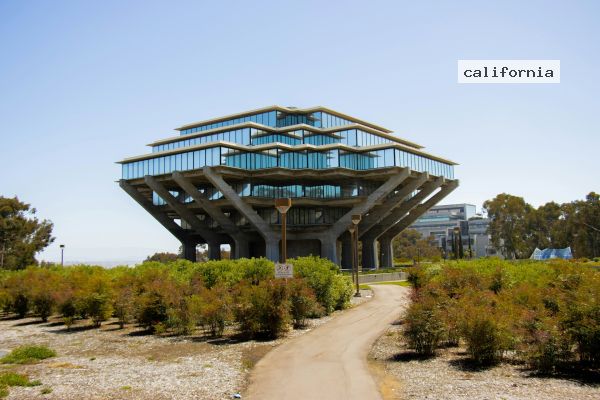
This research highlights the ongoing strength of California as a global hub for astrophysics and space science. The UC San Diego team brings together expertise in instrumentation, data analysis, and cosmology to tackle questions that have puzzled physicists for decades. Their work supports broader efforts to map the early universe and understand how gravity shaped cosmic structure after the Big Bang.
Cosmic microwave background radiation holds clues about the birth of the universe. Astronomers categorize its polarization into two types known as E modes and B modes. E modes display symmetric patterns created by density shifts, while B modes feature curl-like shapes. While lensing effects have already produced observable B modes, detecting primordial versions could reveal evidence of gravitational waves generated moments after the universe began.
The updated calibration framework provides a more dependable pathway for future cosmic observations. By eliminating instrumental noise, researchers can confidently hunt for faint signals that may rewrite our understanding of fundamental physics. As telescope technology continues to advance, methods like this will remain essential for separating true cosmic discoveries from measurement artifacts.