Friday, 2 October 2026, 11:20
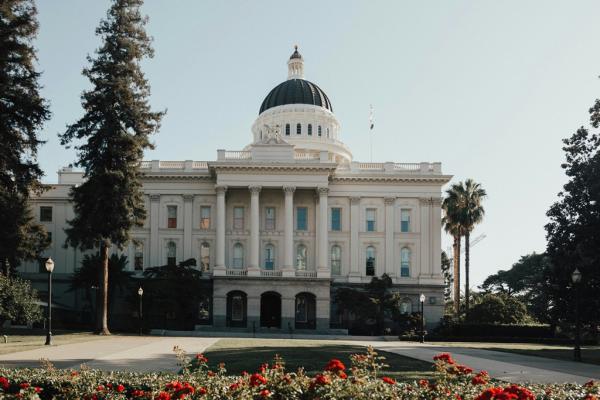
California voters are preparing for a pivotal gubernatorial election as Republican Steve Hilton challenges incumbent-aligned Democrat Xavier Becerra. With mail ballots arriving in early October, the race highlights a stark political divide in a state that has heavily favored Democrats for twenty years.
During their single televised debate on CNN, the two candidates presented contrasting visions for the state. Hilton positioned himself as a change agent, promising to slash utility bills by half, reduce gasoline costs to three dollars per gallon, and erase state income taxes for earners making under one hundred fifty thousand dollars. He also suggested abolishing the Department of Motor Vehicles. Becerra countered by emphasizing his extensive resume in public service, including roles as a U.S. House leader, state attorney general, and federal health secretary. He warned that Hilton would simply enforce a conservative agenda aligned with President Donald Trump.
Mathematical realities pose a steep challenge for Hilton. Registered Democrats outnumber Republicans by nearly two to one across the state. A September survey conducted by the University of California, Berkeley Institute of Governmental Studies confirms that Becerra maintains a substantial advantage. While Hilton aims to capture working-class voters and independents dissatisfied with current living costs, he faces the dual hurdles of national partisan trends and deep Democratic registration margins.
The economic pressures facing Californians drive much of this contest. Soaring household expenses, high property taxes, and persistent homelessness dominate voter concerns. Campaign events frequently target major urban centers like Los Angeles and San Diego, where turnout dictates electoral outcomes. Hilton has been actively campaigning in Southern California to bridge the partisan gap, while Becerra relies on established Democratic strongholds.
California has not elected a Republican governor since Arnold Schwarzenegger won re-election in 2006. Decades of demographic shifts and evolving economic priorities have cemented the state as a Democratic stronghold. Past election cycles have shown that winning statewide office typically requires securing roughly sixty percent of the vote, leaving Republican candidates fighting an uphill battle against entrenched partisan loyalty.
As voting begins, both campaigns intensify outreach efforts to mobilize their bases and sway undecided residents. Hilton must overcome historic registration disadvantages and negative perceptions tied to national politics, while Becerra seeks to maintain momentum and defend his party long hold on Sacramento. Voters will determine whether the state continues its current trajectory or embraces a new political direction.