Tuesday, 27 October 2026, 7:09
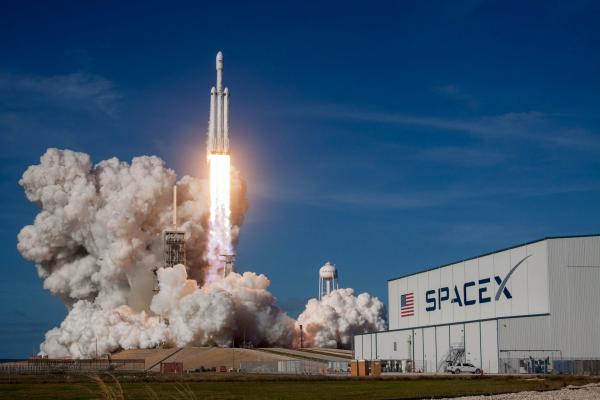
In a landmark moment for aerospace exploration, four astronauts safely returned to Earth after a nearly eight-month mission aboard the International Space Station. The SpaceX Freedom capsule executed a precise splashdown Thursday morning in the Pacific Ocean, marking another successful chapter in public private space partnerships.
The capsule deployed its massive parachutes high above the ocean surface before gliding into the water at approximately 8:35 a.m. Local recovery vessels quickly navigated toward the landing site to secure both the spacecraft and the returning astronauts. Once aboard the ship, the crew boarded helicopters bound for the mainland, concluding a complex extraction operation.
During their tenure, the crew conducted extensive experiments ranging from stem cell production studies to microgravity effects on bone density. Researchers also analyzed how spaceflight impacts blood flow, examined protein crystal growth, and tested next generation space suit prototypes. These findings directly support future deep space exploration efforts and long duration human travel beyond low Earth orbit.
The splashdown location placed the event firmly within Southern California waters, drawing significant attention from regional emergency response teams and maritime operators. Boats positioned along the coast coordinated closely with aerospace recovery protocols to ensure swift retrieval. Local residents and space enthusiasts gathered near coastal viewing areas to witness the historic descent, highlighting the region growing role as a hub for aerospace innovation and monitoring.
Crew 12 launched from Florida earlier in the year and was subsequently replaced by Crew 13, led by Jessica Watkins, who made history as the first Black woman to command a crew to orbit. The rapid transition between crews demonstrates the increasing cadence of SpaceX launches and underscores NASA strategic push toward routine space station access.
This successful return reinforces the reliability of modern commercial crew programs and paves the way for continued scientific discovery in orbit. As recovery operations wrap up, experts emphasize that the data collected during these missions will shape the next generation of interplanetary travel.