Thursday, 8 October 2026, 9:28
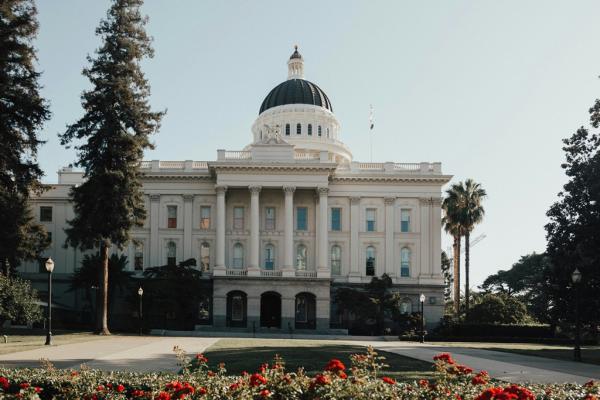
As early voting begins across the Golden State, California is effectively serving as the opening round for the 2028 presidential race. The state's Democratic primary has evolved into a high-stakes proxy war between the party's moderate establishment and its increasingly vocal socialist wing.
At the center of this ideological clash is Proposition 40. This measure proposes a one-time five percent tax on the wealth of Californians valued above one billion dollars. Proponents argue the revenue would help backfill fraud-prone Medi-Cal programs after federal cuts. However, Governor Gavin Newsom and his Democratic successor nominee, Xavier Becerra, firmly oppose it.
The financial disparity in the campaign is stark. Opponents have raised over $252 million, heavily backed by billionaire donors like Google co-founder Sergey Brin, who contributed $102 million alone. In contrast, supporters have gathered roughly $32 million. Despite the funding gap, recent polls show Proposition 40 leading 52 percent to 46 percent among likely voters.
This surge in support for radical measures is less about pure ideological conversion and more about intense voter dissatisfaction. With the state government entirely controlled by Democrats since 2011, incumbents bear full responsibility for persistent crises in housing costs, gas prices, and homelessness.
Governor Newsom's approval rating has dipped to 42 percent, with 55 percent disapproving according to a Berkeley-Politico poll. Sixty-five percent of voters told the Public Policy Institute of California that candidate positions on affordability are crucial. When the ruling party cannot solve daily economic struggles, voters turn to figures promising to make the wealthy pay.
The statewide trend mirrors disruptions in major urban centers. In Los Angeles, Mayor Karen Bass trails socialist Councilmember Nithya Raman in a UC Berkeley poll. Earlier this year, DSA-backed candidates won three of six citywide races outright, and the city attorney became the first incumbent to lose a primary in nearly a century.
Nationally, similar insurgencies have thrived in places where Democrats have held power longest, including New York City, Denver, and the Bay Area. These victories signal a broader demand for systemic change rather than incremental policy tweaks.
The left’s surge here is not mainly an ideological conversion. It is a verdict on results.
The Legislative Analyst's Office warns that Proposition 40 could reduce state income tax revenues by hundreds of millions annually if wealthy residents relocate to neighboring states without a wealth tax. A one-time levy struggles to fund ongoing obligations like Medi-Cal, highlighting the complexity of taxing extreme wealth without national coordination.
As the dust settles, the outcome will shape the trajectory for potential 2028 presidential contenders like Newsom, Kamala Harris, and Ro Khanna. The current primary season underscores that California voters prioritize tangible solutions to affordability over traditional party loyalty.
Stay tuned for final election results and updated polling data as early voting concludes.