Monday, 28 September 2026, 10:09
California approaches its November election navigating two intersecting challenges that could shape voter outcomes. Recent research highlights growing logistical friction within the postal system alongside notable demographic shifts in political motivation.
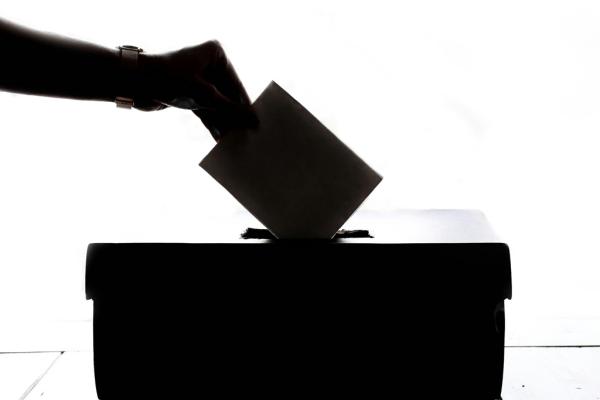
A recent analysis from the Public Policy Institute of California reveals a measurable uptick in mail in ballots failing to meet submission windows. Approximately 1.1 percent of all mail ballots returned during the June 2026 statewide primary arrived too late for counting. This marks a clear increase from the 0.7 percent rejection rate observed during the November 2025 Proposition 50 special election.
Researchers attribute this trend primarily to structural adjustments made by the U.S. Postal Service. The elimination of several evening mail collection routes has created bottlenecks, particularly in rural communities where residents often rely on later drops to secure timely postmarks. Similar delays have been documented in neighboring Washington and Oregon states, indicating a broader regional pattern linked to federal mail routing changes.
California law permits counties to accept vote by mail ballots postmarked on or before Election Day, provided they arrive within seven calendar days afterward. Despite this buffer, election administrators warn that processing backlogs can easily push deliveries past the cutoff window.
Sacramento County offers a practical case study. Historically, roughly half of local voters cast their ballots on Election Day itself. To mitigate risk, election spokesperson Ken Casparis emphasized that officials plan to distribute over sixty secure ballot drop boxes throughout the community well before autumn. The state mandates that completed mail ballots be submitted by 8 p.m. on Election Day, while the Secretary of State strongly advises mailing envelopes at least one week prior.
Parallel to logistical concerns, UCLA researchers have uncovered significant gender divides in political engagement across California. Their findings from the Latino Policy and Politics Institute demonstrate that young and working class Latina voters prioritize protecting immigrant communities and opposing the current federal administration more aggressively than their male counterparts.
This divergence matters deeply because Latinos comprise approximately one third of the state eligible electorate. When policy preferences split along gender lines, campaign strategies and grassroots mobilization efforts must adapt to capture these distinct motivations. The study underscores how generational and cultural factors continue to reshape the Democratic base in western states.
Election officials are responding to both the postal headwinds and the energized voter base with targeted public education campaigns. Sacramento County has secured dedicated funding to promote early voting methods and clarify deadline requirements.
The Secretary of State maintains a real time tracking platform called Where My Ballot so citizens can monitor submission status and correct minor errors before final certification. Officials stress that voters should decide their preferred delivery method immediately rather than waiting until the final hours of the election cycle.
Ballot timing issues have periodically disrupted West Coast elections since the widespread adoption of remote voting. Past electoral cycles show that infrastructure modifications at distribution hubs typically require two full election cycles to stabilize. As agencies coordinate with local governments to reinforce drop box networks and streamline mail sorting, the expectation is that disruption levels will gradually decline.
Voters who proactively track their submissions and utilize certified drop locations will likely experience smoother processes regardless of federal routing adjustments. Staying informed through official state channels remains the most reliable strategy for ensuring every voice is counted.